Pedigree Alpacas for Sale: How to Choose the Right Bloodlines for Your Herd
Buying an alpaca is exciting, but choosing an animal for a long-term breeding program requires more than finding one with an attractive fleece or a good-looking photograph.
If you are searching for pedigree alpacas for sale, you are probably interested in more than appearance. You may want documented ancestry, valuable genetics, proven bloodlines, breeding potential, show prospects, or animals that can complement the herd you already own.
That is where pedigree information becomes useful.
A well-documented pedigree gives you a better understanding of where an alpaca comes from. It can help you study parents, grandparents, bloodlines, and family characteristics before making a purchase.
However, pedigree alone should never be the deciding factor.
The healthiest and most successful breeding decisions usually come from looking at the complete animal.
When comparing pedigree alpacas for sale, you should consider health, conformation, fleece, age, temperament, reproductive history, registration, genetics, and your own breeding objectives.
This guide explains what to look for and how to make a smarter purchase.
What Are Pedigree Alpacas?
The phrase pedigree alpacas for sale generally refers to alpacas with documented ancestry.
A pedigree can show the animal’s parents and, depending on available records, several generations of ancestors.
This information can be particularly useful for breeders.
Knowing an alpaca’s family history may help you identify desirable traits and understand which bloodlines are represented in your herd.
When looking at pedigree alpacas for sale, remember that a pedigree is a record of ancestry, not a guarantee of quality.
The actual animal still needs to be evaluated.
Why Pedigree Matters
One of the main advantages of buying pedigree alpacas for sale is having information that can support breeding decisions.
Imagine buying a young alpaca without knowing its parents.
You may like the animal’s current appearance, but you have less information about what it might contribute genetically.
With a documented pedigree, you have more background to work with.
You can study family characteristics.
You can identify bloodlines.
You can avoid certain combinations.
You can make more informed decisions about future breeding.
Start With Your Own Goals
Before looking at pedigree alpacas for sale, decide what you want from your herd.
Are you interested in breeding?
Do you want fiber-producing animals?
Are you building a show herd?
Do you want specific colors?
Are you interested in Huacaya or Suri alpacas?
Are you trying to improve the genetics of an existing herd?
These questions matter because the most desirable pedigree depends on your objectives.
An animal that is excellent for one program may not be the right choice for another.
Pedigree Does Not Equal Perfection
It is easy to become impressed by a long list of famous ancestors.
However, when comparing pedigree alpacas for sale, do not make the mistake of assuming that ancestry automatically means superior quality.
A pedigree can be impressive while the individual animal has weaknesses.
Likewise, a younger animal from a less famous line may have excellent potential.
Look at the complete picture.
Pedigree should support your decision, not replace proper evaluation.
Study the Parents
When considering pedigree alpacas for sale, begin with the parents.
Ask to see photographs or records of the sire and dam.
If possible, see them in person.
Study their structure.
Look at their fleece.
Consider their health.
Ask about their offspring.
Parents can provide useful clues about the traits an animal may carry.
Look Beyond the Parents
If records are available, study grandparents and earlier generations too.
When researching pedigree alpacas for sale, recurring bloodlines can tell you something about the genetic foundation behind an animal.
Look for traits that appear repeatedly.
Are there strong fleece characteristics?
Is there good conformation?
Are there successful breeding animals in the family?
Are there weaknesses that appear repeatedly?
A pedigree becomes much more useful when you actually analyze it.
Proven Bloodlines
Some buyers specifically search for pedigree alpacas for sale from established bloodlines.
A proven bloodline can provide valuable information.
However, ask what “proven” means.
Does it refer to show results?
Fleece quality?
Breeding performance?
Offspring?
A seller should be able to explain the claim.
Do not rely on impressive-sounding descriptions without supporting information.
Evaluate the Individual Alpaca
Even when searching specifically for pedigree alpacas for sale, start by evaluating the animal in front of you.
Look at body condition.
Observe movement.
Examine the fleece.
Check the legs.
Look at overall balance.
Watch the animal interact with people and other alpacas.
A strong pedigree cannot compensate for every weakness.
Health Should Come First
Health is one of the most important factors when selecting pedigree alpacas for sale.
Ask about veterinary history.
Request available records.
Ask whether the animal has had recurring health problems.
Observe body condition.
Look for normal movement and alert behavior.
For a significant purchase, consider having a veterinarian perform an examination.
A pedigree is valuable, but a healthy animal is the foundation of any successful livestock operation.
Ask for Documentation
A serious seller should be able to explain the documentation associated with their pedigree alpacas for sale.
Depending on the animal and registry, records may include:
- Registration information
- Identification
- Birth date
- Parentage
- Ownership history
- Health records
- Breeding records
- Fleece information
- Show records
- Offspring information
Always compare the animal’s identification with its paperwork.
Verify the Pedigree
Before buying pedigree alpacas for sale, verify the information provided by the seller.
Check names.
Check identification numbers.
Review parentage.
Confirm registration information where applicable.
If an official registry provides a way to verify records, use it.
This is especially important when pedigree is a major part of the asking price.
Registered vs. Pedigree
The terms “registered” and “pedigree” are related, but they should not automatically be treated as identical.
When researching pedigree alpacas for sale, ask what documentation actually exists.
A registered animal may have official records with a recognized registry.
A pedigree refers to documented ancestry.
Ask the seller to explain exactly what is being offered.
Clear documentation is always preferable to vague marketing language.
Examine Fleece Quality
Many buyers searching for pedigree alpacas for sale are interested in fiber.
If that applies to you, evaluate fleece carefully.
Depending on the alpaca type, look at:
- Fineness
- Density
- Crimp
- Staple length
- Uniformity
- Luster
- Lock structure
Do not judge fleece from a single small area.
Examine the overall animal.
Understanding Fineness
Fineness is commonly discussed in alpaca fiber.
When comparing pedigree alpacas for sale, you may encounter micron measurements.
Generally, finer fiber has a lower micron value.
But one number does not tell the entire story.
Consider fineness together with density, consistency, staple characteristics, and overall breeding quality.
If fleece testing is available, ask to see the results.
Huacaya Pedigree Alpacas
Huacaya alpacas are recognized for their dense, crimped fleece.
When comparing pedigree alpacas for sale that are Huacaya, examine crimp structure and density.
Look at fleece uniformity.
Study the parents.
Ask about previous offspring.
Young animals should also be evaluated according to their stage of development rather than being judged as finished adults.
Suri Pedigree Alpacas
Suri alpacas have distinctive locks and noticeable luster.
When evaluating pedigree alpacas for sale from Suri lines, look closely at lock formation, luster, density, and consistency.
Ask about the family’s fleece characteristics.
If you are new to Suri alpacas, spend time learning from experienced breeders before making a substantial investment.
Consider Conformation
Conformation is important when choosing pedigree alpacas for sale for breeding.
Look at overall balance.
Observe the legs and feet.
Watch the animal walk.
Study the topline.
Look for obvious structural problems.
If you are not confident evaluating conformation, ask an experienced breeder or livestock professional to help.
Watch the Animal Move
Photographs cannot show everything.
When viewing pedigree alpacas for sale, ask to see the alpaca walking naturally.
Observe movement from different angles.
Look for comfortable, coordinated movement.
This simple step can provide useful information that a standing photograph may not reveal.
Male Pedigree Alpacas
A breeding male can have a major influence on future generations.
When evaluating male pedigree alpacas for sale, study his ancestry carefully.
Examine fleece.
Evaluate conformation.
Ask about reproductive history.
If he has already produced offspring, ask to see them.
A proven sire can offer information that an unproven youngster cannot.
Female Pedigree Alpacas
Females can form the foundation of a breeding program.
When comparing female pedigree alpacas for sale, ask about their reproductive history.
How many crias have they produced?
Were pregnancies successful?
How did previous offspring develop?
Were there any reproductive concerns?
A proven female can provide valuable evidence about maternal and genetic performance.
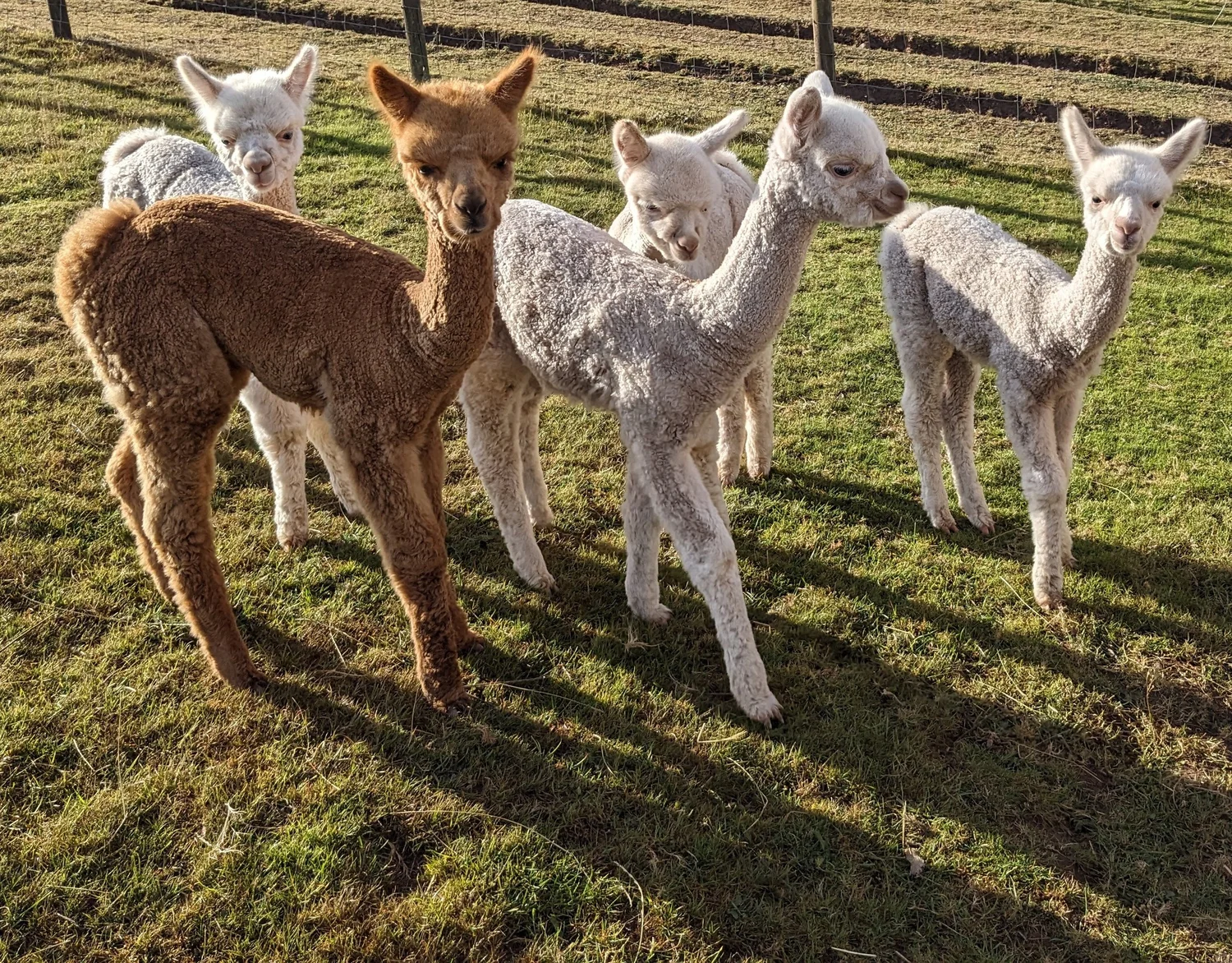
Young Alpacas
Young animals are often appealing because they may have many productive years ahead.
When considering young pedigree alpacas for sale, however, remember that development is still occurring.
Study their parents.
Review the pedigree.
Look at current structure.
Examine fleece.
Ask experienced breeders for an objective assessment.
Do not assume that a promising youngster is guaranteed to become an exceptional adult.
Proven vs. Unproven Animals
A proven animal has demonstrated some characteristics through actual performance.
An unproven animal has greater uncertainty.
When comparing pedigree alpacas for sale, decide how much uncertainty you are comfortable with.
A proven breeding animal may cost more.
A young unproven animal may offer exciting potential.
Both can have a place in a thoughtful breeding program.
Reproductive History
Reproductive performance is particularly important for breeding buyers.
Ask about pregnancy history.
Ask about successful births.
Ask about previous crias.
Ask about any complications.
When considering pedigree alpacas for sale, reproductive records can help you distinguish between an attractive pedigree and demonstrated performance.
Look at Previous Offspring
If an animal has produced offspring, ask to see them.
When evaluating pedigree alpacas for sale, offspring can provide real-world evidence of what the animal may contribute.
Look at several offspring if possible.
Compare their fleece.
Study their development.
Observe their structure.
Ask about their health.
Consistent results are particularly valuable.
Temperament Matters
Temperament is easy to overlook when looking at pedigree alpacas for sale.
But you will interact with these animals regularly.
Observe how they respond to people.
Are they manageable?
Are they excessively nervous?
How do they behave during routine handling?
A calm and manageable animal can make everyday farm work easier.
Ask Why the Animal Is Being Sold
There are many legitimate reasons why pedigree alpacas for sale may become available.
A breeder may be downsizing.
The farm may be restructuring bloodlines.
An owner may be retiring.
The animal may no longer fit the breeding plan.
The reason itself is not necessarily a red flag.
Ask respectfully and consider the answer alongside everything else you learn.
Visit the Farm
If possible, visit the farm before purchasing pedigree alpacas for sale.
A visit lets you see the animal and its environment.
Look at fencing.
Check shelter.
Observe water availability.
Watch the herd.
Talk to the breeder.
You may learn more in one farm visit than you could from dozens of online photographs.
Don’t Rely on Photos Alone
Beautiful photographs can be useful for finding pedigree alpacas for sale.
They should not be the basis for a major purchase.
Ask for recent images.
Request full-body photographs.
Ask for videos showing the animal moving.
If possible, see the alpaca in person.
Research the Breeder
The breeder is an important part of the purchase.
When comparing pedigree alpacas for sale, learn about the seller.
How long have they worked with alpacas?
What kind of breeding program do they operate?
Do they maintain detailed records?
Can they answer questions about their bloodlines?
Are they transparent about strengths and weaknesses?
A responsible breeder should be willing to have an honest conversation.
Red Flags to Watch For
Use caution if a seller offering pedigree alpacas for sale:
- Refuses to provide documentation
- Cannot explain the pedigree
- Gives contradictory information
- Refuses an in-person inspection
- Makes unrealistic guarantees
- Avoids health questions
- Uses only old photographs
- Pressures you to send money immediately
A legitimate seller should be comfortable with reasonable questions.
Price and Value
Prices for pedigree alpacas for sale can vary considerably.
Several factors can affect value.
These may include:
- Bloodline
- Registration
- Age
- Sex
- Health
- Fleece
- Conformation
- Reproductive history
- Proven offspring
- Show performance
- Seller reputation
Do not compare animals using price alone.
Compare what each animal actually offers.
Don’t Forget Ongoing Costs
The purchase price is only the beginning.
When buying pedigree alpacas for sale, budget for:
- Feed
- Hay
- Veterinary care
- Shearing
- Transportation
- Fencing
- Shelter
- Water
- Equipment
- Breeding management
A realistic budget helps you build a sustainable herd.
Transportation
Before buying pedigree alpacas for sale, determine how you will transport the animal.
Consider the distance.
Think about weather.
Use appropriate livestock transportation.
Prepare the destination before the alpaca leaves the seller’s property.
If you are buying multiple animals, make a detailed transportation plan.
Prepare Your Farm
Your property should be ready before your new pedigree alpacas for sale arrive.
Check fencing.
Prepare shelter.
Provide clean water.
Have appropriate forage available.
Set aside an area for new arrivals if your veterinarian recommends quarantine.
Good preparation reduces unnecessary stress.
Quarantine New Animals
If you already own alpacas, discuss quarantine procedures with your veterinarian.
New pedigree alpacas for sale should not automatically be placed directly into an established herd.
Even animals that look healthy can potentially introduce health concerns.
Your veterinarian can recommend appropriate testing and quarantine procedures based on your circumstances.
Nutrition
Ask the seller about the current diet before bringing home pedigree alpacas for sale.
Avoid unnecessary sudden changes.
Provide suitable forage and clean water.
Monitor body condition.
If an animal has specialized nutritional requirements, seek professional advice.
Good nutrition supports the animal’s overall condition and long-term management.
Build Your Own Pedigree Records
Once you purchase pedigree alpacas for sale, maintain your own organized records.
Record:
- Animal identification
- Registration number
- Birth date
- Parents
- Health history
- Breeding dates
- Pregnancy information
- Births
- Offspring
- Fleece information
Good records can become one of the most valuable tools on your farm.
Plan Future Breeding
A pedigree should help you make better decisions.
When choosing pedigree alpacas for sale, consider how the new animal fits with your existing genetics.
Do not simply match the most impressive male with the most impressive female.
Look at strengths and weaknesses.
Think about what you want the next generation to improve.
Avoid Blindly Following Famous Bloodlines
A famous bloodline can be useful.
But it should not automatically determine your purchase.
When evaluating pedigree alpacas for sale, ask what the bloodline actually contributes to your program.
Does it improve fleece?
Conformation?
Color?
Breeding performance?
Genetic diversity?
If a famous bloodline does not help your goals, its name alone may not justify a higher price.
Buying for Fiber
Fiber-focused buyers should put considerable attention on fleece.
When reviewing pedigree alpacas for sale, ask about previous fleece production.
Look at quality.
Consider consistency.
Ask about testing.
Think about your intended market.
The best breeding animal for your fiber program is one whose genetics support the characteristics your customers value.
Buying for Breeding
If your primary objective is breeding, look at the entire animal.
When comparing pedigree alpacas for sale, consider pedigree, health, structure, fleece, temperament, fertility, and offspring.
No single trait should dominate the entire decision.
Strong breeding programs are built through balanced selection.
Buying for Shows
Show prospects require careful evaluation.
When considering pedigree alpacas for sale for showing, examine conformation, fleece, pedigree, and previous show records where available.
Ask experienced breeders for honest opinions.
Remember that a promising young animal still has to develop.
Create a Comparison Sheet
If you are comparing several pedigree alpacas for sale, write the information down.
| Factor | Animal A | Animal B | Animal C |
|---|---|---|---|
| Age | |||
| Sex | |||
| Pedigree | |||
| Registration | |||
| Health | |||
| Fleece | |||
| Conformation | |||
| Breeding history | |||
| Offspring | |||
| Price | |||
| Herd compatibility |
A comparison sheet helps you make a decision based on facts rather than excitement.
Questions to Ask Before Buying
Before committing to pedigree alpacas for sale, ask:
About the animal
- How old is the alpaca?
- What is its identification number?
- Is registration current?
- Who are the parents?
- What is its health history?
- Has it been bred?
About the pedigree
- Can I see the complete pedigree?
- Which bloodlines are represented?
- Are there notable offspring?
- Are there known weaknesses?
About the seller
- How long have you bred alpacas?
- Why are you selling this animal?
- Can I visit the farm?
- Can I see the parents or offspring?
About the transaction
- What paperwork is included?
- How will ownership transfer?
- Is transportation available?
- What is included in the asking price?
Frequently Asked Questions
What are pedigree alpacas?
Pedigree alpacas are animals with documented ancestry that can show their parents and potentially multiple generations of ancestors.
Why buy pedigree alpacas?
Pedigree alpacas for sale can provide useful ancestry information for breeding, herd development, fiber programs, and genetic planning.
Does a pedigree guarantee quality?
No. A pedigree documents ancestry. The individual alpaca still needs to be evaluated for health, fleece, conformation, temperament, and breeding potential.
Are pedigree alpacas expensive?
They can vary significantly in price. Bloodlines, age, genetics, fleece, registration, reproductive history, and other characteristics influence value.
Should I buy a young or proven alpaca?
That depends on your goals. Proven animals provide more performance information, while young animals may offer longer-term potential.
What should I check on a pedigree?
Check parents, grandparents where available, recurring bloodlines, registration information, and traits associated with the family.
Should I verify registration?
Yes. If registration is important to your purchase, verify the animal’s identification and documentation with the appropriate registry.
Can pedigree alpacas be used for fiber?
Yes. Pedigree and fiber production are separate considerations. Evaluate the actual fleece rather than relying on ancestry alone.
Should I visit the breeder?
Whenever possible, yes. A farm visit allows you to inspect the animal, observe the herd, review management practices, and speak directly with the breeder.
What is the most important thing when buying pedigree alpacas?
Choose an animal that fits your goals. Consider health, genetics, pedigree, fleece, conformation, temperament, reproductive history, and long-term herd compatibility.
Final Thoughts
Searching for pedigree alpacas for sale can open the door to some exciting opportunities.
A documented pedigree can give you information that would otherwise be difficult to obtain.
You can study bloodlines.
You can understand ancestry.
You can identify potential breeding combinations.
You can build a herd with a clearer genetic direction.
But remember that paperwork is only part of the story.
The animal standing in front of you matters.
Its health matters.
Its fleece matters.
Its structure matters.
Its temperament matters.
Its reproductive history matters.
And, perhaps most importantly, its genetics need to make sense for your own breeding objectives.
Take your time when comparing pedigree alpacas for sale.
Ask questions.
Request documentation.
Verify registration.
Visit farms.
Study parents and offspring.
Compare several animals.
Avoid making a major decision simply because a seller uses impressive bloodline names or attractive photographs.
The strongest alpaca programs are built patiently.
Each purchase should move the herd in a useful direction.
When you approach pedigree alpacas for sale with a clear plan and careful evaluation, you can make decisions based on real value rather than marketing alone.
That approach may take a little more time at the beginning, but it can pay off for years as your herd develops.