Kalahari Red Goats for Sale: A Practical Buyer’s Guide to Choosing Healthy Goats
Kalahari Red Goats for Sale
Buying goats is one of those decisions that looks straightforward until you start comparing actual animals.
You see one with a beautiful coat.
Another has impressive parents.
A third is priced lower than the rest.
Then you start wondering which one is actually right for your farm.
If you are searching for Kalahari Red Goats for Sale, you are probably looking for more than a good-looking goat. You may be building a meat-goat operation, expanding an existing herd, starting a small farm, or looking for hardy breeding animals.
Whatever your reason, the purchase deserves some thought.
A good goat can become a valuable part of your herd for years. A poorly planned purchase, on the other hand, can bring unexpected health, management, or breeding problems.
The answer is not to become an expert overnight.
The better approach is to know what to look for, ask useful questions, compare sellers carefully, and understand what you are actually buying.
This guide takes a practical, straightforward look at Kalahari Red Goats for Sale, from selecting a breeder to preparing your property and evaluating potential breeding stock.
Why Kalahari Red Goats Attract Farmers
Kalahari Red goats have become popular among producers interested in meat-goat production and hardy livestock.
Their distinctive red coloring immediately makes them recognizable.
But appearance is not the only reason farmers are interested.
Producers often look at their adaptability, maternal characteristics, growth, body structure, and suitability for meat production.
For someone researching Kalahari Red Goats for Sale, those characteristics can make the breed an interesting option for a well-managed operation.
Still, no breed automatically succeeds on every farm.
Climate, pasture, management, genetics, nutrition, and market conditions all matter.
The best goat for one operation may not be the best goat for another.
Start by Defining Your Goal
Before contacting sellers advertising Kalahari Red Goats for Sale, decide exactly what you want from your animals.
Are you building a commercial meat herd?
Do you want breeding stock?
Are you looking for a few goats for a smaller farm?
Are you interested in registered animals?
Do you want to improve the genetics of an existing herd?
These questions matter.
A commercial producer may prioritize growth, reproductive performance, sound structure, and overall herd productivity.
A breeder may place greater emphasis on pedigree and genetics.
A small farmer may focus on manageable animals and dependable production.
Knowing your goal prevents you from paying for characteristics you do not actually need.
Commercial Production
For farmers searching for Kalahari Red Goats for Sale for commercial production, the conversation should go beyond color.
Look at the animal’s structure.
Consider growth.
Review reproductive history when available.
Ask about the performance of related animals.
Consider the environment in which the goats were raised.
A goat that performs well under conditions similar to yours may be more useful than one that looks impressive but comes from a completely different production environment.
Building a Breeding Herd
If breeding is your main objective, selecting Kalahari Red Goats for Sale requires more planning.
You are not simply buying individual animals.
You are buying genetics that may influence generations of your herd.
Study pedigrees.
Ask about parents.
Look at siblings or offspring where possible.
Consider what traits the breeder is selecting for.
Most importantly, think about how a new animal will complement your existing genetics.
What to Look for in a Healthy Goat
Health should be near the top of your checklist when evaluating Kalahari Red Goats for Sale.
Start with simple observations.
Does the goat look alert?
Is it moving normally?
Does it appear excessively thin?
Is the coat in reasonable condition?
Are the eyes clear?
Does the animal breathe normally?
Are there obvious signs of injury?
You are not expected to diagnose every possible problem.
You are simply looking for obvious warning signs and gathering enough information to make a sensible decision.
Examine Body Condition
Body condition can tell you a lot about an animal.
When comparing Kalahari Red Goats for Sale, pay attention to whether the goat appears appropriately conditioned for its age and circumstances.
An extremely thin goat deserves questions.
An excessively heavy goat also deserves attention.
Ask the seller about feeding.
Find out whether the animal has recently experienced illness, stress, or a change in management.
If you are inexperienced, ask a knowledgeable goat producer or veterinarian to help evaluate potential purchases.
Watch the Goat Walk
Do not evaluate a goat while it is standing still.
Ask to see it walk.
When examining Kalahari Red Goats for Sale, watch the legs and feet carefully.
Look for obvious limping.
Watch for stiffness.
Observe whether the animal moves comfortably.
Good movement is particularly important for breeding animals and commercial herds.
Structural problems can become more difficult and expensive to manage over time.
Check the Feet
Feet are easy to overlook when buyers become excited about genetics.
Do not skip them.
Ask sellers of Kalahari Red Goats for Sale about their hoof-management routine.
Find out when the animal was last trimmed.
Ask whether there have been recurring problems.
Good hoof management is an important part of maintaining a productive herd.
Evaluate the Breeder or Seller
The animal matters.
The person selling it matters too.
When researching Kalahari Red Goats for Sale, investigate the farm behind the listing.
How long has the breeder been working with Kalahari Reds?
Do they know the history of their animals?
Can they answer detailed questions?
Do they keep records?
Are they willing to show you the herd?
Do they clearly explain their breeding goals?
You should feel comfortable asking questions.
A serious livestock seller should understand why buyers want information before spending money.
Visit the Farm
If practical, visit the farm before purchasing Kalahari Red Goats for Sale.
A farm visit gives you information that photographs cannot provide.
You can see the herd.
You can observe management.
You can inspect fencing.
You can look at shelters.
You can watch how the breeder handles animals.
You can also see whether the general condition of the herd matches what you were told online.
The farm does not have to be spotless.
It should demonstrate responsible livestock management.
Look at More Than One Goat
Do not focus entirely on the animal you are considering.
When viewing Kalahari Red Goats for Sale, examine the surrounding herd.
Are most animals in reasonable condition?
Are they alert?
Do they have access to clean water?
Are facilities adequate?
Do the goats appear accustomed to being handled?
A herd tells you a lot about management.
One animal can have an individual issue.
A pattern across many animals is more significant.
Ask About the Goat’s History
A good seller should know the history of the animals they offer.
When discussing Kalahari Red Goats for Sale, ask about:
- Age
- Parents
- Pedigree
- Health history
- Reproductive history
- Feeding
- Vaccination and preventive-care practices
- Hoof care
- Previous breeding
- Reason for sale
You do not need to interrogate the seller.
You simply need enough information to understand what you are buying.
Why Pedigree Matters
Pedigree becomes especially important when buying Kalahari Red Goats for Sale for breeding.
A pedigree can help you understand lineage.
It can also show relationships between animals in a breeding program.
If you already own goats, avoid accidentally creating undesirable levels of inbreeding.
Discuss your breeding plans with someone knowledgeable before making major decisions.
A pedigree is useful because it provides context.
It should not, however, replace evaluating the actual animal.
Do Not Buy Paperwork Alone
A goat can have impressive ancestry and still not be the right animal for your farm.
When comparing Kalahari Red Goats for Sale, look at the individual.
Evaluate structure.
Observe health.
Consider temperament.
Look at performance information.
Ask what the breeder is trying to accomplish.
Good genetics are valuable.
Good management is valuable too.
Selecting a Breeding Doe
Female goats can become the foundation of a productive herd.
When choosing female Kalahari Red Goats for Sale, consider reproductive history if the animal is mature.
Ask about previous pregnancies.
Ask about kidding history.
Find out whether the doe has raised healthy kids.
Ask about any known reproductive issues.
For young does, there may be less information available.
In that case, study her parents, structure, health, and overall potential.
Selecting a Breeding Buck
A buck deserves serious attention because he can influence many offspring.
When evaluating male Kalahari Red Goats for Sale, consider his genetics, structure, health, temperament, and breeding history.
Look carefully at his legs and feet.
Consider his body structure.
Ask about his parents.
Find out what offspring he has produced if he is an established breeder.
Do not select a buck simply because he is large.
Think about the traits he can add to your herd.
What About Young Goats?
Young goats can be attractive to buyers searching for Kalahari Red Goats for Sale.
They may offer the opportunity to develop animals according to your management system.
However, young animals are not fully proven.
You may have less information about their mature size, breeding performance, or future productivity.
Ask about the parents.
Look at siblings if possible.
Study the breeder’s overall herd.
Then make your decision based on potential rather than assuming future performance is guaranteed.
Buying Mature Goats
Mature animals offer a different advantage.
When examining mature Kalahari Red Goats for Sale, you can evaluate characteristics that are already established.
You may have access to reproductive records.
You can observe mature structure.
You may be able to evaluate offspring.
You can assess temperament more clearly.
For certain breeding programs, this information can be extremely valuable.
Color Is Not Everything
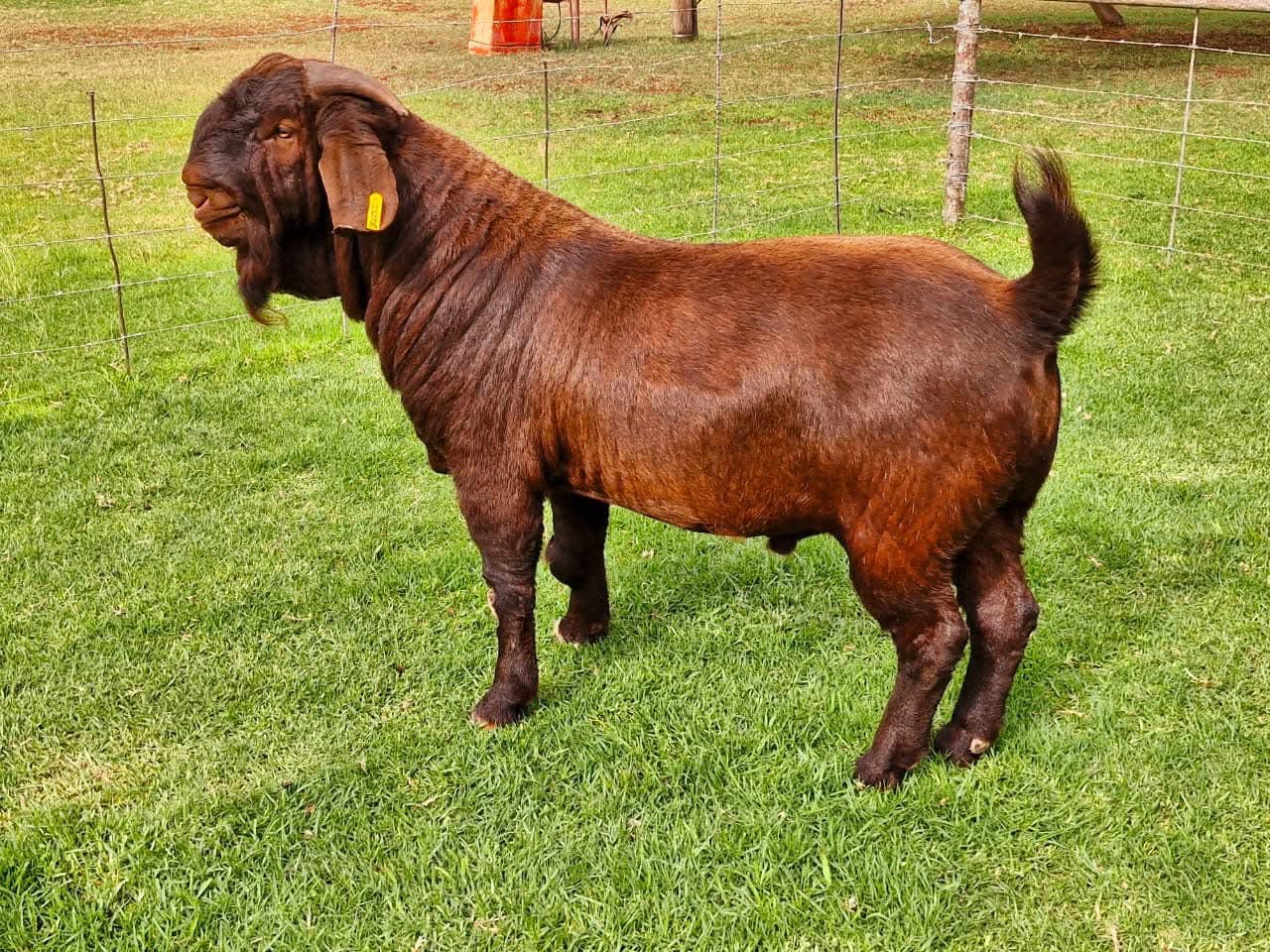
The rich red coat is one of the most recognizable characteristics of Kalahari Red goats.
It is also one of the first things buyers notice.
But when looking at Kalahari Red Goats for Sale, do not let color become your entire selection process.
A beautiful coat cannot compensate for poor health or unsound structure.
Think about the complete animal.
Health.
Structure.
Genetics.
Temperament.
Production potential.
Management history.
Those characteristics should all have a place in your decision.
Nutrition Before and After Purchase
Ask the seller what the Kalahari Red Goats for Sale currently eat.
Find out about pasture.
Ask about hay.
Ask about supplements and minerals.
Learn about the feeding schedule.
When animals move to a new farm, avoid making unnecessary sudden changes.
If you need to adjust the diet, do it gradually and consult an appropriate livestock professional when necessary.
Good nutrition supports the foundation of herd management.
Pasture Management
Goats can be excellent browsers.
They often make use of vegetation that cattle may not prefer.
However, that does not mean you can simply turn goats onto any property and forget about pasture management.
When preparing for Kalahari Red Goats for Sale, assess the quality of your land.
Consider seasonal changes.
Plan for periods when pasture quality drops.
Avoid relying on a single food source.
Good grazing management can contribute to healthier animals and better long-term use of your land.
Mineral and Nutritional Planning
Mineral requirements should not be guessed.
When purchasing Kalahari Red Goats for Sale, ask what mineral program the animals are accustomed to.
Discuss your local conditions with a veterinarian or livestock nutrition professional.
Different soils and feeds can influence nutritional needs.
Providing more of something is not always better.
Balanced nutrition matters.
Prepare Strong Fencing
One of the first things you should do before purchasing Kalahari Red Goats for Sale is inspect your fencing.
Goats are excellent at finding weak spots.
Check gates.
Look for holes.
Repair damaged sections.
Remove sharp objects.
Make sure smaller animals cannot easily escape through gaps.
A secure fence protects your investment and saves you countless headaches.
Provide Suitable Shelter
Goats need appropriate protection from weather.
Before bringing Kalahari Red Goats for Sale home, prepare a shelter that fits your climate.
The shelter should provide protection from heavy rain, wind, heat, and other local weather conditions.
Ventilation is important.
Cleanliness matters.
The structure should also be easy for you to access and maintain.
Practical is usually better than complicated.
Clean Water Is Non-Negotiable
Fresh water should be part of your daily routine.
Before bringing home Kalahari Red Goats for Sale, make sure your water system is ready.
Check containers regularly.
Clean them.
Make sure goats can reach them.
Pay particular attention during hot periods.
Water management is simple, but neglecting it can quickly create problems.
Veterinary Planning
Before purchasing Kalahari Red Goats for Sale, find a veterinarian familiar with goats in your area.
Do not wait until something goes wrong.
Ask about routine health care.
Discuss preventive practices.
Talk about parasite management.
Ask what signs of illness you should monitor.
Having professional support available can make livestock ownership much less stressful.
Quarantine New Animals
If you already have goats, discuss quarantine with your veterinarian before adding Kalahari Red Goats for Sale to your herd.
New arrivals should not automatically be placed directly with established animals.
A proper introduction and health-management plan can help protect the existing herd.
Your veterinarian can recommend an approach based on your local circumstances.
Buying Goats Online
Online listings make it easier to find Kalahari Red Goats for Sale outside your immediate area.
That can be useful if you are searching for particular genetics.
However, online shopping requires additional care.
Ask for recent photographs.
Request videos.
Ask for records.
Verify the location.
Ask whether an in-person inspection is possible.
If you cannot visit, take extra time to verify the seller and documentation before committing to a purchase.
Warning Signs to Watch For
Be cautious if someone advertising Kalahari Red Goats for Sale:
- Refuses reasonable questions.
- Cannot provide current photographs.
- Avoids video requests.
- Gives inconsistent information.
- Refuses reasonable inspection.
- Pressures you to pay immediately.
- Makes unrealistic claims about guaranteed profits.
- Cannot explain the animal’s history.
- Provides unclear transportation details.
One warning sign does not automatically prove that a seller is dishonest.
But several together should make you stop and investigate further.
How Much Do Kalahari Red Goats Cost?
There is no universal price for Kalahari Red Goats for Sale.
Prices can vary based on age, sex, pedigree, registration, genetics, health, breeding history, conformation, and seller reputation.
A young goat may have a very different price from an established breeding animal.
A proven buck may command more than an ordinary wether.
The important thing is to understand what you are paying for.
Look at Total Ownership Costs
Do not build your budget around the purchase price alone.
When planning for Kalahari Red Goats for Sale, consider:
- Purchase price
- Transportation
- Feed
- Hay
- Minerals
- Veterinary care
- Fencing
- Shelter
- Equipment
- Hoof care
- Emergency expenses
A goat that appears inexpensive at the beginning may not necessarily be the cheapest long-term option.
Buying for Meat Production
Kalahari Red goats are often considered by producers interested in meat production.
If that is your goal when searching for Kalahari Red Goats for Sale, think about the entire production system.
Consider growth.
Reproduction.
Kid survival.
Pasture availability.
Feed costs.
Local market demand.
Processing options.
Your business plan should come before significant herd expansion.
A productive herd still needs a profitable market.
Building a Commercial Herd
A commercial producer searching for Kalahari Red Goats for Sale should think in terms of herd performance rather than individual appearance.
Track useful information.
Monitor kidding.
Record growth.
Observe health.
Keep breeding records.
Track costs.
Evaluate which animals contribute positively to the operation.
Over time, your records can help you make better selection decisions.
Starting a Small Goat Farm
You do not need hundreds of animals to begin.
For someone new to goats, starting with a manageable number of Kalahari Red Goats for Sale can make learning much easier.
You can learn the daily routine.
You can develop your feeding system.
You can understand pasture management.
You can build relationships with local professionals.
Then you can expand gradually if the operation makes sense.
Do Not Rush Into Herd Expansion
Finding several attractive Kalahari Red Goats for Sale can create the temptation to buy everything at once.
Slow down.
Learn your management system first.
A larger herd means more feed, more fencing requirements, more health management, and more records.
Growth should be intentional.
It should support your goals rather than simply increase your animal count.
Keep Good Records
Good records are incredibly useful.
When managing Kalahari Red Goats for Sale after purchase, record important information about each animal.
Track birth dates.
Parents.
Breeding.
Kidding.
Health events.
Weights where relevant.
Treatments.
Sales.
These records become especially valuable as your herd grows.
Memory is unreliable.
Written records are not.
Building a Relationship With Breeders
A good breeder can become a valuable long-term contact.
When buying Kalahari Red Goats for Sale, look for sellers who are willing to answer questions after the sale.
They may be able to explain feeding routines.
They may know the animal’s family history.
They may be able to recommend services.
They may become a source for future breeding stock.
The best livestock relationships often last much longer than the original transaction.
Questions to Ask Before Buying
Before purchasing Kalahari Red Goats for Sale, ask the seller:
How old is the goat?
Who are the parents?
Is pedigree information available?
What is the health history?
What does the goat eat?
What mineral program is currently used?
When were the hooves last trimmed?
Has the goat been bred?
What is the reproductive history?
Why are you selling the animal?
Can I visit the farm?
What transportation options are available?
The answers will help you determine whether the animal is a good fit.
Common Buying Mistakes
One common mistake is buying solely because a goat looks impressive.
Another is choosing entirely by price.
Some buyers ignore health records.
Others skip the farm visit.
Some buy breeding stock without studying genetics.
Others bring goats home before preparing fencing.
Most of these mistakes can be avoided.
Take your time.
Research first.
Buy second.
Do Not Be Afraid to Walk Away
This is one of the best rules for livestock buyers.
If you are uncomfortable with the seller, the animal, the records, or the transaction, walk away.
There will be other Kalahari Red Goats for Sale.
You do not need to force a purchase because you have already spent time researching an animal.
Patience gives you an advantage.
It allows you to compare.
It gives you time to ask another question.
And it reduces the chance of making an expensive mistake.
Frequently Asked Questions
Where can I find Kalahari Red Goats for Sale?
You can search through established breeders, goat farms, livestock networks, agricultural events, breed organizations, and reputable online listings. Always investigate the seller before purchasing.
What should I look for when buying a Kalahari Red goat?
Look at health, body condition, movement, feet, temperament, genetics, pedigree, age, and breeding history. Your goals should determine which traits receive the most attention.
Are Kalahari Red goats good for meat production?
They are widely associated with meat-goat production, but results depend on genetics, nutrition, management, climate, and market conditions.
How much do Kalahari Red goats cost?
Prices for Kalahari Red Goats for Sale vary considerably depending on age, sex, pedigree, registration, genetics, health, breeding history, and other characteristics.
Should I buy a buck or a doe?
That depends on your goal. Breeding programs may need both, while buyers seeking non-breeding animals may have different needs. Wethers can also be considered for appropriate companion or non-breeding situations.
Should I visit the farm before buying?
Yes. A farm visit allows you to inspect the animal, see the herd, observe management practices, and speak directly with the seller.
What questions should I ask a breeder?
Ask about age, parents, pedigree, health, nutrition, breeding history, hoof care, reason for sale, and available records. Also ask whether you can inspect the animal in person.
Are Kalahari Red goats suitable for beginners?
They can be suitable for new livestock owners who are prepared to learn proper goat management. Beginners should understand fencing, feeding, shelter, health care, and routine handling.
Do Kalahari Red goats need special fencing?
They need secure fencing appropriate for goats. Inspect your property carefully for gaps, weak sections, and potential escape routes before bringing animals home.
What should I feed Kalahari Red goats?
Their diet should be based on suitable forage, pasture, hay, and appropriate supplementation according to their nutritional needs and local conditions. Consult a livestock professional about a complete feeding program.
How many goats should I start with?
The right number depends on your property, resources, experience, and goals. Starting with a manageable herd can help new owners learn proper management before expanding.
Can I buy Kalahari Red goats online?
Yes. Online listings can help you find animals from farms outside your area. However, verify the seller, request current information, inspect animals when possible, and plan transportation carefully.
Final Thoughts
Searching for Kalahari Red Goats for Sale can be the beginning of something exciting.
Maybe you are starting your first goat herd.
Maybe you are expanding a commercial operation.
Maybe you are looking for better breeding genetics.
Whatever the reason, the purchase should be based on more than a photograph and a price tag.
Look at the animal.
Look at the herd.
Look at the farm.
Look at the records.
And look at the person selling the goats.
A good Kalahari Red Goats for Sale opportunity is one where the animal matches your goals and the seller provides enough information for you to make a sensible decision.
Do not rush because an animal looks impressive.
Do not choose solely because the price seems low.
Do not ignore health because you like the genetics.
And do not buy more goats than your property and budget can comfortably support.
Good livestock management is built slowly.
Start with healthy animals.
Keep useful records.
Learn from experienced producers.
Work with your veterinarian.
Improve your management over time.
When you approach Kalahari Red Goats for Sale with that mindset, you are not simply buying goats.
You are making the first decisions that will shape your herd.
And those decisions can make a significant difference in how enjoyable and productive your goat operation becomes.