Alpaca Breeding Stock for Sale: A Practical Guide to Building a Strong, Healthy Herd
Building an alpaca herd is one of those projects that looks simple until you start doing the research.
At first, you might think the process is straightforward. Find an attractive animal, check the price, arrange transportation, and bring it home.
In reality, choosing alpaca breeding stock for sale requires a little more thought.
A breeding animal can influence your herd for years. The genetics you introduce today can show up in future crias, fleece quality, conformation, temperament, and overall herd performance.
That is why experienced buyers rarely purchase an animal simply because it looks impressive.
They ask questions.
They study pedigrees.
They inspect health records.
They look at the parents.
They think about how the animal fits their existing herd.
If you are searching for alpaca breeding stock for sale, this guide will walk you through the process in a straightforward way.
The goal is not to make buying complicated.
It is to help you make a decision you will still feel good about several years from now.
What Is Alpaca Breeding Stock?
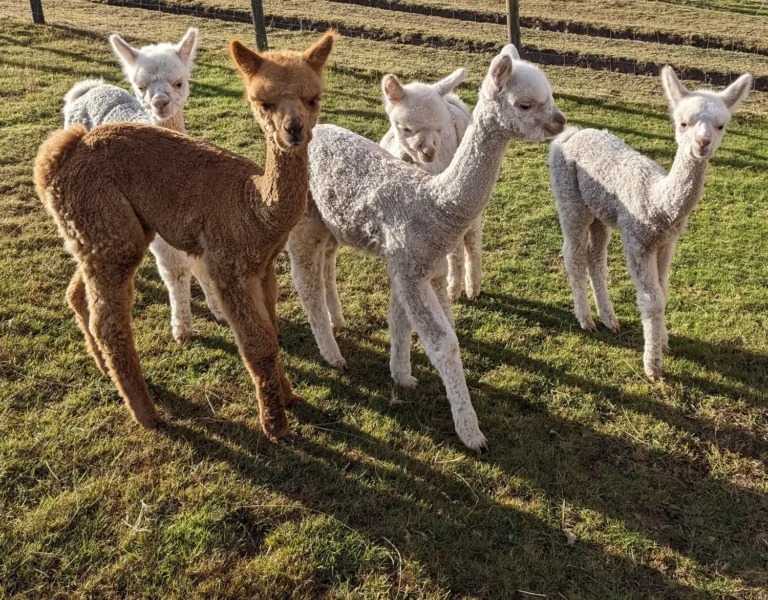
Breeding stock refers to alpacas selected specifically for their potential to reproduce and contribute desirable traits to future generations.
When looking at alpaca breeding stock for sale, you are not simply buying livestock for today’s pasture.
You are buying genetics.
That distinction matters.
A companion alpaca and a breeding prospect can have completely different selection criteria.
A breeding animal needs to be evaluated for health, reproductive suitability, structure, genetics, pedigree, fleece characteristics, and other traits relevant to your breeding objectives.
The best animal for your program depends on what you are trying to improve.
Start With a Clear Breeding Goal
Before browsing alpaca breeding stock for sale, decide what you want your herd to become.
Do you want to produce high-quality fiber?
Are you interested in improving fleece fineness?
Do you want better density?
Are you working toward specific colors?
Are you interested in Huacaya or Suri genetics?
Do you want to improve conformation?
Perhaps your goal is simply to build a healthy, well-balanced herd.
There is no wrong answer.
What matters is having an answer.
Without a clear objective, it is surprisingly easy to buy animals based on photographs, impressive pedigrees, or attractive prices.
Think About the Next Generation
One of the most important things to understand about alpaca breeding stock for sale is that the purchase is about more than the individual animal.
You should think about its potential offspring.
Ask yourself what characteristics the animal could add to your herd.
Maybe your females have excellent conformation but average fleece.
Maybe you have good fleece but want to introduce different genetics.
Perhaps your herd needs a particular color.
A breeding purchase should have a purpose.
Health Should Come First
It is easy to get excited about fleece and pedigree when looking at alpaca breeding stock for sale.
Health should still come first.
A beautiful animal with an unknown health history can create problems that are much more expensive than the original purchase price.
Look for an animal that appears alert and appropriately conditioned.
Watch it move.
Ask about previous illnesses.
Request relevant veterinary records.
Discuss vaccinations and parasite management.
If the purchase is significant, consider having an experienced veterinarian evaluate the animal before finalizing the transaction.
Why a Farm Visit Matters
Photographs are useful when searching for alpaca breeding stock for sale.
They help you create a shortlist.
They let you compare animals from different breeders.
They can show fleece characteristics and overall appearance.
But photographs cannot tell you everything.
If possible, visit the breeder.
Watch the animals in their normal environment.
Look at the pasture.
Check the water.
Observe the fencing.
Look at other alpacas.
Most importantly, talk to the breeder.
A visit can give you a much better sense of how the animals are raised.
Look at the Entire Herd
When evaluating alpaca breeding stock for sale, do not focus exclusively on the animal you are considering.
Look at the rest of the herd.
Do the animals generally appear healthy?
Are they appropriately conditioned?
Are they alert?
Do they have access to suitable shelter and water?
Are the facilities reasonably clean and safe?
You are looking for patterns.
One animal may have an individual issue.
The overall herd can tell you much more about the breeder’s management practices.
Study the Pedigree Carefully
Pedigree is one of the most discussed subjects when buying alpaca breeding stock for sale.
A pedigree can help you understand an animal’s genetic background.
Study the sire.
Study the dam.
Look at grandparents when relevant.
Ask about notable ancestors.
Find out which traits are common within the family.
However, do not become so impressed by names that you forget to evaluate the actual animal.
A famous bloodline does not automatically make every offspring the right choice for your herd.
Ask What the Pedigree Actually Means
When a breeder discusses alpaca breeding stock for sale, ask them to explain the strengths of the bloodlines involved.
Do they have strong fleece?
Good structure?
Useful breeding history?
Consistent offspring?
This conversation can be more valuable than simply receiving a pedigree document.
You want to understand the genetics, not merely collect impressive names.
Examine the Sire
The sire can have a major influence on the future direction of your herd.
When considering alpaca breeding stock for sale, ask about his breeding history.
How many offspring has he produced?
What characteristics do those offspring show?
Does the breeder keep records?
Can you see some of his offspring?
For a proven male, offspring can provide valuable evidence of what he actually passes on.
For an unproven male, you must rely more heavily on pedigree, structure, fleece, and other observable traits.
Examine the Dam
The female is equally important.
When reviewing alpaca breeding stock for sale, ask about the dam’s reproductive history.
Has she produced crias?
How has she performed as a mother?
What are her fleece characteristics?
What is her temperament like?
If she has produced several offspring, ask whether the breeder can describe their development.
The more information available, the better you can judge the breeding potential of the family.
Conformation Matters
A breeding animal should be structurally sound.
When inspecting alpaca breeding stock for sale, watch the animal walk.
Look at its legs.
Observe its posture.
Pay attention to balance.
Look at the body from different angles.
You are not trying to become a veterinarian or livestock judge overnight.
You are simply looking for obvious structural concerns and asking informed questions.
If you are uncertain, seek professional or experienced advice.
Watch the Animal Move
Standing still can hide things.
When viewing alpaca breeding stock for sale, ask the seller to walk the animal naturally.
Watch how it moves.
Look for obvious stiffness or lameness.
Pay attention to balance.
Good movement is especially important for animals intended for a long-term breeding program.
Evaluate Body Condition
Body condition should be considered alongside age and reproductive status.
When comparing alpaca breeding stock for sale, ask whether the animal has experienced any recent weight changes.
Find out what it currently eats.
Ask about pasture and supplements.
If records are available, review them.
Avoid judging an animal solely by size.
A larger animal is not automatically a better breeding animal.
Fleece Quality
For many buyers, fleece is the reason they begin searching for alpaca breeding stock for sale.
That makes sense.
Alpaca fiber has a strong connection to the breed’s commercial and agricultural appeal.
But fleece should be evaluated carefully.
Depending on your objectives, you may consider:
- Fineness
- Density
- Crimp
- Lock structure
- Luster
- Uniformity
- Staple length
- Color
- Consistency
Your priorities should reflect your market and breeding goals.
Huacaya Breeding Stock
If you are looking for alpaca breeding stock for sale, you will likely encounter Huacaya animals frequently.
Huacaya alpacas generally have dense fleece with a crimped appearance.
For a Huacaya breeding program, buyers may pay close attention to fleece density, fineness, crimp structure, uniformity, and overall conformation.
Do not evaluate fleece separately from the rest of the animal.
A balanced breeding prospect should make sense as a complete package.
Suri Breeding Stock
Suri alpacas have a different fleece structure.
Their fleece commonly develops into longer locks and can have a noticeable luster.
When comparing alpaca breeding stock for sale for a Suri program, pay attention to lock structure, luster, fineness, density, uniformity, and genetics.
Again, your breeding objectives should determine which characteristics receive the greatest attention.
Color and Genetics
Color can be an important part of a breeding strategy.
When searching for alpaca breeding stock for sale, you may have a specific color in mind.
That can be useful.
But color should not automatically outrank health, structure, or genetics.
If you are building a diverse fiber program, multiple colors may be valuable.
If you are pursuing a specific breeding objective, color may play a larger role.
Know why you want a particular color before paying a premium for it.
Proven vs. Unproven Animals
This distinction is important.
When buying alpaca breeding stock for sale, you may encounter proven and unproven animals.
A proven breeding animal has already produced offspring, giving buyers additional information.
An unproven animal has potential but has not yet demonstrated its breeding results.
Neither category is automatically better.
A young, unproven animal may carry excellent genetics.
A proven animal provides more evidence of actual performance.
The right choice depends on your budget and risk tolerance.
Buying a Proven Male
A proven male can be particularly valuable for a breeding program.
When evaluating alpaca breeding stock for sale, ask for information about his offspring.
Do they demonstrate the traits you want?
Are they structurally sound?
How does their fleece compare?
Has the breeder documented his breeding history?
The more evidence you have, the easier it becomes to evaluate the purchase.
Buying a Female for Your Foundation Herd
Foundation females deserve careful consideration.
When reviewing alpaca breeding stock for sale, look for females that complement your breeding objectives.
Consider pedigree.
Consider fleece.
Consider conformation.
Consider reproductive history.
Consider temperament.
If the female is young and unproven, place additional emphasis on her parents and family.
Breeding Goals Should Guide Your Budget
It is easy to spend too much when looking at alpaca breeding stock for sale.
One animal catches your eye.
Then you discover an impressive pedigree.
Then you see another with excellent fleece.
Suddenly, your original budget has disappeared.
Set your budget before shopping.
More importantly, divide your budget according to your breeding strategy.
A foundation female may deserve a different investment from a pasture companion.
A proven male may command a different price from an unproven juvenile.
What Determines Alpaca Breeding Stock Prices?
Prices for alpaca breeding stock for sale can vary considerably.
Factors that may influence value include:
- Age
- Sex
- Pedigree
- Genetics
- Registration
- Fleece quality
- Breeding history
- Offspring performance
- Conformation
- Color
- Location
- Breeder reputation
Because so many factors are involved, avoid comparing prices without comparing animals.
Calculate the Real Cost
The purchase price is not the entire cost of owning alpaca breeding stock for sale.
You also need to consider transportation.
There are feed costs.
There is veterinary care.
There is shearing.
There may be fencing improvements.
You may need shelter.
You may need breeding management.
There can also be unexpected veterinary expenses.
A realistic budget should account for all of these.
Research the Breeder’s Reputation
When researching alpaca breeding stock for sale, spend time researching the breeder.
Look for evidence of consistent breeding practices.
Read available reviews carefully.
Ask other alpaca owners about their experiences when appropriate.
Look for breeders who provide clear information.
A good breeder should be interested in finding a suitable home for the animal rather than simply completing a sale.
Ask Difficult Questions
Do not be afraid to ask uncomfortable questions when considering alpaca breeding stock for sale.
Why are you selling this animal?
Has it had health problems?
Has it failed to produce?
Are there known genetic concerns?
Why did you select this mating?
What are the animal’s weaknesses?
These questions do not mean you distrust the breeder.
They mean you are taking the purchase seriously.
An honest answer can be more valuable than a perfect sales pitch.
Look for Transparency
Transparency is one of the strongest signs to look for when buying alpaca breeding stock for sale.
A responsible seller should be able to provide reasonable information about the animal.
That can include pedigree records.
Health records.
Breeding history.
Fleece information.
Registration information where applicable.
Transportation details.
You do not need every question answered instantly.
But consistent communication matters.
Avoid Buying From Pressure
If someone is aggressively pressuring you to purchase alpaca breeding stock for sale, slow down.
A serious breeding decision should not feel like an impulse purchase.
Take time to review the information.
Speak with an experienced breeder if necessary.
Consult a veterinarian when appropriate.
Think about whether the animal genuinely fits your program.
If the answer is unclear, waiting is often the better decision.
Buying Online
Online listings have made alpaca breeding stock for sale much easier to discover.
You can compare breeders across regions.
You can view photographs.
You can watch videos.
You can contact farms directly.
But online buying requires verification.
Ask for current photos.
Request videos.
Ask for records.
Confirm the seller’s identity.
If possible, visit the animal.
If distance makes that difficult, consider having someone knowledgeable inspect it for you.
Warning Signs
Be cautious if a listing for alpaca breeding stock for sale:
- Uses only stock or outdated photographs.
- Avoids specific questions.
- Refuses reasonable video requests.
- Cannot explain the pedigree.
- Gives inconsistent information.
- Makes unrealistic breeding guarantees.
- Pressures you to pay immediately.
- Refuses inspection.
- Provides vague transportation information.
One unusual detail does not automatically mean something is wrong.
Several warning signs together deserve caution.
Prepare Your Property
Do not wait until the animal is purchased before preparing your farm.
Before bringing alpaca breeding stock for sale home, inspect your property.
Check the fencing.
Prepare shelter.
Confirm water access.
Review pasture conditions.
Remove hazards.
Prepare quarantine space if needed.
Have feed available.
The animal should arrive at a property that is ready for it.
Fencing
Secure fencing is essential for alpaca breeding stock for sale.
Walk the entire perimeter.
Check gates.
Repair broken sections.
Look for gaps.
Remove sharp objects.
Consider how young animals could interact with the fencing.
A good fence protects livestock and makes daily management easier.
Shelter and Shade
Your alpaca breeding stock for sale purchase should have suitable protection from local weather conditions.
In hot climates, shade and ventilation are important considerations.
In wet climates, drainage and dry shelter become more important.
In colder areas, protection from wind and severe conditions may require additional planning.
There is no universal shelter design.
Your setup should match your climate and management system.
Feeding Your New Breeding Animals
Ask the breeder what your alpaca breeding stock for sale animals currently eat.
Find out about hay.
Ask about pasture.
Ask about minerals.
Ask about supplements.
Do not suddenly change the diet without a plan.
A gradual transition, guided by appropriate professional advice, can make the move easier on the animals.
Veterinary Planning
Before purchasing alpaca breeding stock for sale, identify a veterinarian who can support your herd.
Discuss routine health care.
Ask about preventive medicine appropriate to your region.
Talk about parasite management.
Ask about reproductive health.
Discuss quarantine.
A veterinarian familiar with alpacas can become an important partner as your herd develops.
Quarantine New Purchases
If you already own animals, discuss quarantine with your veterinarian before adding alpaca breeding stock for sale.
New arrivals should not automatically be mixed with an established herd.
A suitable quarantine program can help reduce disease risks.
Your veterinarian can recommend a protocol appropriate for your farm.
Transportation
Transportation is another part of the buying process.
Before purchasing alpaca breeding stock for sale, establish how the animal will reach your farm.
Ask the seller about transport options.
Consider distance.
Consider weather.
Make sure the vehicle or transport arrangement is appropriate for livestock.
Confirm all arrangements before the animal leaves the breeder.
Keep Records
Good records make a breeding program much easier to manage.
For every alpaca breeding stock for sale purchase, record:
- Animal identification
- Birth date
- Sire
- Dam
- Breeder
- Purchase date
- Health records
- Veterinary treatments
- Vaccinations
- Fleece information
- Breeding history
- Offspring
These records become increasingly valuable as the herd grows.
Why Breeding Records Matter
Suppose you purchase alpaca breeding stock for sale today.
Five years later, you may have several generations of animals.
Without good records, it becomes difficult to understand which pairings produced the results you wanted.
Good documentation allows you to track performance.
You can identify successful bloodlines.
You can recognize weaknesses.
You can make more informed future breeding decisions.
Avoid Breeding Without a Plan
Owning alpaca breeding stock for sale does not automatically mean every animal should be bred.
Before making a mating decision, ask what you want the offspring to achieve.
Consider genetics.
Consider conformation.
Consider fleece.
Consider health.
Consider the strengths and weaknesses of both animals.
A breeding program should be intentional.
Think in Generations
The best breeding programs are not built overnight.
When purchasing alpaca breeding stock for sale, think several generations ahead.
The animal you buy today may produce offspring that become part of your herd for years.
That means today’s decision can affect tomorrow’s genetics.
Patience is one of the most valuable qualities a breeder can have.
Building a Fiber-Focused Herd
If fiber is your main goal, selecting alpaca breeding stock for sale should begin with a clear understanding of your target fiber characteristics.
Decide what your market values.
Perhaps you want fineness.
Perhaps you want density.
Perhaps you want strong lock structure.
Perhaps you want a particular color range.
Then select breeding animals accordingly.
Do not try to improve everything at once.
Focus on a manageable number of traits.
Building a Diverse Herd
Some farms want a broad genetic base.
When evaluating alpaca breeding stock for sale, genetic diversity may become an important consideration.
Talk with experienced breeders about bloodlines.
Avoid unnecessarily narrowing your breeding options.
At the same time, genetic diversity should be considered alongside quality and compatibility.
The goal is a healthy, productive breeding program rather than simply collecting unrelated animals.
Common Buying Mistakes
One of the biggest mistakes people make when purchasing alpaca breeding stock for sale is focusing too heavily on appearance.
Another is assuming that an expensive animal must be better.
Some buyers become overly impressed by pedigree.
Others ignore health history.
Some fail to examine offspring from proven animals.
Others never visit the breeder.
Each mistake can be avoided with basic research.
Do Not Buy Solely on Price
A low-priced alpaca breeding stock for sale listing may look attractive.
But ask why the animal is priced that way.
Is it young?
Is it unproven?
Is the breeder reducing numbers?
Does it have a less desirable trait?
Is there limited documentation?
Price should always be viewed in context.
A more expensive animal may make sense if it provides proven genetics and characteristics your program genuinely needs.
How to Compare Two Animals
Imagine you have two options for alpaca breeding stock for sale.
One has an impressive pedigree but mediocre fleece.
The other has excellent fleece but a less familiar pedigree.
Which is better?
There is no universal answer.
The right choice depends on your herd.
If you already have strong fleece, the first animal may add useful genetics.
If your herd needs fleece improvement, the second might make more sense.
That is why breeding decisions need context.
Questions to Ask Every Breeder
Before buying alpaca breeding stock for sale, ask:
What is the animal’s age?
Who are the sire and dam?
What is the pedigree?
What are the animal’s strongest traits?
What are its weaknesses?
What is its health history?
What is its breeding history?
What are its fleece characteristics?
Does it have offspring?
Why is it being sold?
Can I visit?
What records are included?
How will transportation be handled?
Good breeders should understand why you are asking.
A Simple Breeding Stock Checklist
Before purchasing alpaca breeding stock for sale, check the following.
Health
- Good body condition
- Alert behavior
- Comfortable movement
- Appropriate veterinary records
- No unexplained health concerns
Genetics
- Known sire
- Known dam
- Pedigree
- Breeding history
- Relevant offspring information
Fleece
- Desired fineness
- Suitable density
- Consistent structure
- Appropriate color
- Useful family history
Management
- Secure fencing
- Suitable pasture
- Shelter
- Clean water
- Veterinary support
If an important area remains unclear, ask more questions before buying.
Frequently Asked Questions
What is alpaca breeding stock?
Breeding stock consists of alpacas selected for their ability to contribute desirable genetics and traits to future generations. When evaluating alpaca breeding stock for sale, buyers should consider health, genetics, conformation, fleece, temperament, and reproductive suitability.
How do I choose good alpaca breeding stock?
Start by defining your breeding goals. Then evaluate health, pedigree, parents, fleece, structure, temperament, and breeding history. A veterinarian or experienced breeder can also provide valuable guidance.
Is a proven alpaca better than an unproven animal?
Not necessarily. Proven animals provide evidence through offspring, while unproven animals may have excellent potential based on genetics and physical characteristics. Your budget and goals should influence the decision.
How much does alpaca breeding stock cost?
Prices vary considerably. Age, genetics, pedigree, fleece, registration, sex, breeding history, offspring performance, location, and breeder reputation can all influence the value of alpaca breeding stock for sale.
Should I buy a male or female?
It depends on your breeding program. Females may be used as foundation animals, while males can influence many future offspring. Both should be selected according to your specific goals.
What makes good alpaca breeding genetics?
There is no single trait that defines good genetics. The appropriate genetics depend on your objectives. Buyers may prioritize fleece, conformation, color, health, reproductive performance, or other characteristics.
Should I visit a breeder before buying?
Whenever possible, yes. Visiting allows you to inspect the animal, parents, herd, facilities, and management practices.
Can I buy alpaca breeding stock online?
Yes, online listings can help you locate alpaca breeding stock for sale, but buyers should verify sellers, request current information, inspect records, and visit animals whenever practical.
What should I look for in a breeding male?
Consider health, structure, fleece, pedigree, temperament, and breeding history. If the male has offspring, study their characteristics as well.
What should I look for in a foundation female?
A foundation female should fit your breeding objectives and have appropriate health, structure, genetics, fleece characteristics, and temperament. Reproductive history can be especially useful in mature females.
Do I need a veterinarian before buying?
Professional veterinary advice can be very valuable, especially for significant purchases. A veterinarian can help with health assessments, quarantine, preventive care, and herd management.
How should I prepare for new breeding animals?
Prepare fencing, shelter, water, pasture, feed, quarantine facilities, transportation, and veterinary support before the animals arrive.
Final Thoughts
Searching for alpaca breeding stock for sale is not simply a matter of finding the prettiest animal or the most impressive advertisement.
It is a long-term decision.
The animal you purchase today could influence your herd for years.
That is why careful buyers slow down.
They study pedigrees.
They examine parents.
They look at offspring.
They inspect fleece.
They evaluate structure.
They ask about health.
They research the breeder.
They consider their own goals.
Most importantly, they think beyond the purchase itself.
When you find alpaca breeding stock for sale, ask yourself one simple question:
Does this animal move my herd in the direction I want it to go?
If the answer is yes, the purchase may make sense.
If the answer is unclear, keep researching.
There is no prize for building a herd quickly.
A strong breeding program is built through thoughtful decisions, consistent records, careful selection, and patience.
Whether you are starting with your first pair or expanding an established operation, the same principle applies.
Choose animals for a reason.
Understand their genetics.
Take care of their health.
Prepare your farm.
Work with knowledgeable breeders and veterinary professionals.
And give your breeding program time to develop.
The right alpaca breeding stock for sale can become much more than another animal in your pasture.
It can become part of the foundation of your future herd.