Alpaca Livestock for Sale: A Practical Guide to Choosing, Buying, and Raising Quality Alpacas
Buying livestock is never something to rush.
A photograph can make an animal look impressive, but there is much more to consider before money changes hands.
You need to think about health, age, temperament, genetics, fleece, registration, transportation, housing, feeding, and the purpose you have in mind.
That becomes especially important when you are looking at alpaca livestock for sale.
Alpacas can be fascinating animals to raise. They can fit into small family farms, larger breeding operations, fiber businesses, and carefully planned livestock programs.
However, the right animal for one buyer may be completely wrong for another.
A person starting a small fiber herd has different priorities from someone searching for elite breeding stock.
This guide takes a practical, straightforward look at what buyers should know before purchasing alpacas.
Understanding the Alpaca Market
The market for alpaca livestock for sale includes animals with very different backgrounds, ages, genetics, and purposes.
Some are young animals being offered by established breeders.
Others are mature breeding animals with documented histories.
There are also alpacas raised primarily for fiber, companion purposes, or herd development.
That variety is useful, but it can also make shopping confusing.
Before you begin comparing alpaca livestock for sale, decide what you actually want your animals to accomplish.
Your goal should guide your search rather than allowing an attractive photograph to make the decision for you.
Decide Why You Want Alpacas
Someone searching for alpaca livestock for sale should first identify whether the goal is breeding, fiber production, farming, showing, or simply keeping alpacas.
Breeding buyers may prioritize pedigrees, reproductive history, conformation, and genetic potential.
Fiber buyers may place greater emphasis on fleece fineness, density, uniformity, crimp, or lock structure.
A first-time owner may care more about manageable animals, reliable support, and straightforward husbandry.
Understanding your purpose makes the buying process much easier.
Choosing Healthy Animals
Health should always be one of the first considerations when evaluating alpaca livestock for sale.
A healthy-looking animal should appear alert and reasonably well conditioned.
Watch how it stands and moves.
Pay attention to its behavior.
Look at its coat and general appearance.
If something seems unusual, ask questions rather than making assumptions.
A professional veterinary examination can also provide valuable information before completing an important purchase.
Ask About Health Records
When reviewing alpaca livestock for sale, ask what health documentation is available.
Records may provide information about veterinary care, vaccinations, treatments, identification, and other relevant history.
A breeder who maintains organized records can make your transition much easier.
Keep copies of important documents after purchasing an animal.
Good records become increasingly valuable as your herd grows.
Look at the Whole Herd
Do not judge alpaca livestock for sale by looking at only one animal.
If possible, observe the surrounding herd.
Do the animals generally appear healthy?
Are they active?
Are their living areas reasonably clean and maintained?
Does the breeder appear attentive to their needs?
The condition of the overall herd can give you useful insight into the farm’s management practices.
Huacaya and Suri Alpacas
Buyers researching alpaca livestock for sale will usually encounter two major types: Huacaya and Suri.
Huacaya alpacas are known for dense fleece with a crimped appearance.
Suri alpacas have distinctive longer locks and noticeable luster.
Neither type is automatically better.
The right choice depends on what you want from your herd and the market you intend to serve.
Choosing Huacaya Alpacas
If you are interested in alpaca livestock for sale with fiber production in mind, Huacaya animals may be worth studying closely.
Look at fleece density, fineness, crimp, staple characteristics, and uniformity.
Do not evaluate fleece from photographs alone.
If possible, handle and examine the actual fleece.
Ask the breeder about previous fleece records and how the animals have performed over time.
Choosing Suri Alpacas
When evaluating alpaca livestock for sale from a Suri program, pay attention to lock structure and luster.
The fleece should be evaluated alongside overall health and conformation.
Ask how the breeder selects Suri animals.
Find out what traits they are trying to improve.
A clear breeding philosophy can tell you more than a simple sales description.
Age Matters
The age of alpaca livestock for sale can influence price, management, breeding potential, and your expectations.
Young animals may offer future potential but have less proven performance.
Mature animals may have established breeding or fleece records.
Older animals can still have value depending on their health, genetics, and purpose.
There is no universally perfect age.
The right age depends on your goals and budget.
Buying Young Alpacas
Young alpaca livestock for sale can be appealing because buyers get the opportunity to watch the animal develop.
However, young animals may not yet have demonstrated their mature characteristics.
You may have less information about future fleece performance or reproductive results.
That uncertainty should be reflected in your expectations and purchasing decision.
Buying Mature Alpacas
Mature alpaca livestock for sale may provide more information because you can evaluate the animal’s development.
You may also be able to review breeding history, offspring, fleece records, and other performance information.
For buyers building a serious breeding program, proven animals can provide useful evidence.
Still, mature does not automatically mean superior.
Evaluate the individual animal carefully.
Study the Genetics
Genetics can be one of the most important factors when selecting alpaca livestock for sale for breeding.
Ask about pedigrees.
Study parents and grandparents where records are available.
Look for traits that align with your breeding objectives.
Avoid selecting animals simply because they have impressive-sounding names or popular bloodlines.
The best choice is the animal that fits your particular program.
Why Pedigrees Matter
Pedigrees can help buyers understand the background of alpaca livestock for sale.
They can also help you avoid unsuitable pairings in the future.
If you intend to establish a breeding program, organized pedigree information should become part of your normal record-keeping system.
Ask the breeder to explain anything you do not understand.
Good breeders should be willing to discuss their animals.
Evaluate Conformation
Conformation deserves attention when examining alpaca livestock for sale intended for breeding.
Look at the animal as a whole.
Observe its stance.
Watch it walk.
Consider its proportions and overall structure.
If you are inexperienced, ask a knowledgeable breeder or veterinarian for guidance.
Learning what good structure looks like can take time.
There is no need to pretend you know everything during your first purchase.
Temperament and Handling
Temperament can influence the daily experience of owning alpaca livestock for sale.
Alpacas are individuals.
Some are naturally calm and easy to handle.
Others may be more cautious.
Observe how animals respond to people.
Watch how the breeder moves them.
Ask whether the animal has been handled regularly.
A manageable animal can make routine care considerably easier.
Ask Why the Animal Is Being Sold
A simple question can reveal useful information about alpaca livestock for sale.
Ask the seller why the animal is available.
There are many perfectly legitimate reasons.
A breeder may be reducing herd size.
They may be changing their breeding direction.
They may have retained younger offspring.
They may be retiring.
The reason for a sale should be considered alongside the animal’s actual condition and records.
Registered Alpacas
Registration can be important for buyers searching for alpaca livestock for sale intended for a breeding program.
If registration matters to you, ask for documentation.
Verify identification.
Make sure the animal’s records correspond with its physical identification.
Ask about ownership transfers and any paperwork required after purchase.
Registration is useful, but it should never replace your evaluation of health and quality.
Understanding Fleece
Fleece is one of the biggest attractions for many people considering alpaca livestock for sale.
However, fleece quality involves more than simply looking at a fluffy animal.
Buyers may evaluate fineness, density, uniformity, staple characteristics, crimp, lock structure, and luster.
Different markets value different traits.
Before purchasing, understand which characteristics matter most to your intended use.
Fleece Records
When comparing alpaca livestock for sale, ask whether the breeder keeps fleece records.
Useful records can show how an animal has performed over multiple shearing seasons.
Historical information can be more useful than a single impressive photograph.
If fiber production is central to your business plan, make fleece evaluation part of your purchasing process.
Feeding Requirements
Before purchasing alpaca livestock for sale, make sure you understand the animals’ current feeding program.
Ask what forage they receive.
Ask about hay.
Ask about minerals and supplements.
Find out how feeding changes during different seasons.
When bringing animals home, avoid making sudden nutritional changes.
Discuss an appropriate transition with your veterinarian or qualified livestock professional.
Preparing Your Property
Your property should be ready before alpaca livestock for sale arrives at your farm.
Fencing should be secure.
Water should be available.
Shelter should be prepared.
Feed storage should be organized.
A handling area can also make future management easier.
Preparing first is much less stressful than trying to build infrastructure while animals are already on the property.
Fencing Requirements
Secure fencing is essential for alpaca livestock for sale once they arrive at your property.
Walk your boundaries before bringing animals home.
Check gates.
Inspect corners.
Look for gaps.
Make sure internal paddocks are usable.
Good fencing can also make separating animals much easier when you need to manage different groups.
Water Supply
Reliable water should be a priority when preparing for alpaca livestock for sale.
Check your water sources before purchasing.
If your system depends on electricity, think about what happens during a power outage.
Have a practical backup plan where appropriate.
Clean, accessible water is one of the basic requirements of responsible livestock management.
Shelter and Weather Protection
Suitable shelter should be ready before alpaca livestock for sale arrives.
The appropriate setup depends on your local climate and property.
Shelters should provide suitable protection from harsh weather while maintaining good airflow.
They should also be easy to clean and maintain.
A simple, practical shelter can often be more useful than an elaborate structure that is difficult to manage.
Transportation
Transportation is often overlooked when purchasing alpaca livestock for sale.
Ask the seller how animals are normally transported.
Make sure you have a suitable vehicle or arrange professional livestock transportation.
Plan the route in advance.
Consider travel time, weather, loading arrangements, and where the animals will go when they arrive.
Good planning reduces stress for both you and the animals.
Quarantine New Animals
If you already own livestock, discuss quarantine procedures with your veterinarian before introducing new alpaca livestock for sale to your existing herd.
The purpose is to reduce the risk of introducing disease or parasites.
Your veterinarian can recommend an appropriate approach based on your animals, location, and circumstances.
Do not assume that every new animal can immediately join the established herd.
Buying From a Breeder
Established breeders can be useful sources when searching for alpaca livestock for sale.
A breeder who has maintained records over several years may be able to explain an animal’s background in detail.
Ask about their breeding goals.
Ask how they select animals.
Ask what they feed.
Ask about health management.
A conversation can reveal a great deal about how the farm operates.
Visiting the Farm
Whenever possible, visit the farm before buying alpaca livestock for sale.
Photographs are useful, but they cannot show you everything.
Visit the property.
See the herd.
Look at the facilities.
Ask questions.
Watch the animals.
A farm visit gives you a much better understanding of what you are purchasing.
What to Observe
During a visit to see alpaca livestock for sale, pay attention to the general environment.
Are fences maintained?
Is water available?
Are shelters practical?
Do animals appear comfortable?
Is the property reasonably organized?
No farm will look perfect every minute of every day.
The goal is to understand the overall management system.
Ask Plenty of Questions
Do not hesitate to ask questions about alpaca livestock for sale.
Good questions include:
- How old is the animal?
- What is its health history?
- Is it registered?
- What is its pedigree?
- Has it been bred?
- What is its fleece history?
- Why is it being sold?
- What does it currently eat?
- Has it been transported before?
- What documentation comes with the purchase?
Write the answers down.
Understanding Pricing
The price of alpaca livestock for sale can vary considerably.
Factors may include age, genetics, registration, fleece characteristics, breeding history, sex, color, health, and proven performance.
Location can also influence prices.
Do not compare animals based solely on asking price.
Compare what you are actually getting.
A more expensive animal may have valuable documented characteristics, while a cheaper animal may require additional investment.
Don’t Buy Solely on Price
Low-cost alpaca livestock for sale can be tempting.
But the purchase price is only one part of ownership.
You may also pay for transportation, feed, veterinary care, fencing, shelter, shearing, and routine maintenance.
A slightly higher initial purchase price can sometimes make more sense if the animal fits your goals better.
Think about total value rather than the cheapest number.
Build a Livestock Budget
Before purchasing alpaca livestock for sale, create a basic budget.
Include the animal purchase.
Then add transportation.
Consider feed.
Add veterinary expenses.
Budget for shearing.
Include fencing repairs.
Think about insurance and other property costs.
This gives you a much more realistic picture of what ownership will cost.
Breeding Considerations
If you plan to breed your alpaca livestock for sale, start by defining the traits you want to improve.
Maybe you want stronger fleece.
Perhaps you want improved fineness.
You may want better conformation.
You could be working toward a specific color or breeding goal.
Whatever the goal, document it.
Breeding without a clear objective can quickly produce a herd without a consistent direction.
Males and Females
When purchasing alpaca livestock for sale for breeding, understand the role each animal will play.
A high-quality male can influence many future offspring.
Females also form the foundation of a breeding program.
Do not assume that purchasing the most expensive male solves everything.
A successful program requires a balanced genetic strategy.
Young Crias
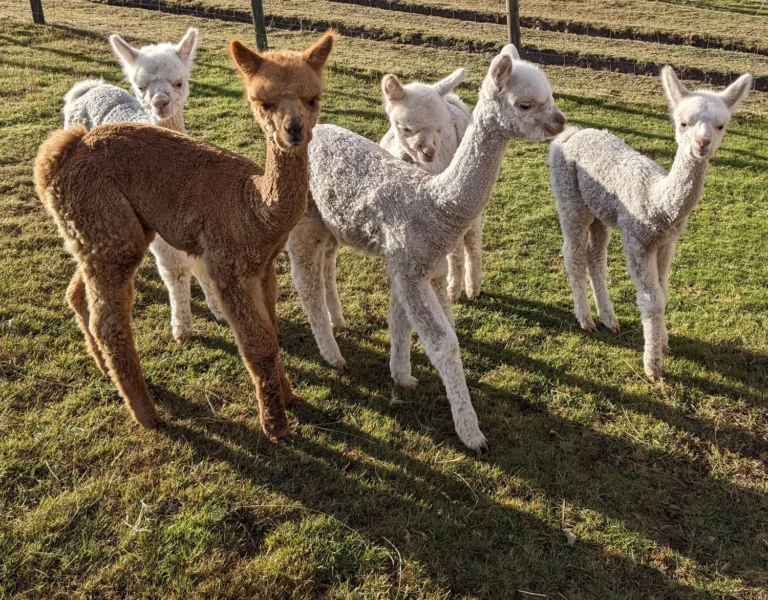
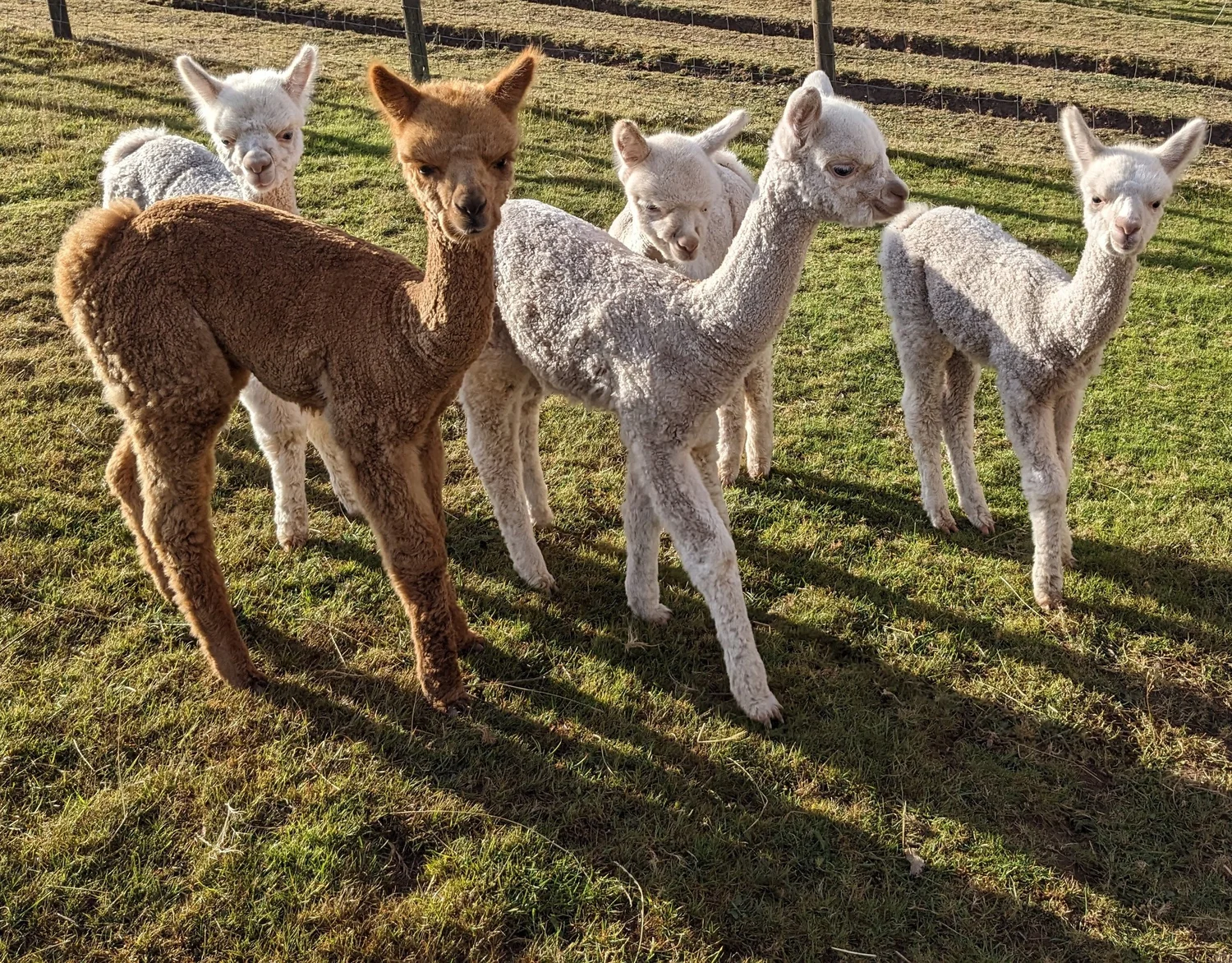
Crias are among the most appealing alpaca livestock for sale for many new buyers.
Their small size and playful behavior make them hard to resist.
However, buyers should remember that young animals still have considerable development ahead of them.
Their future characteristics are not always fully predictable.
If buying a cria, ask about its parents, birth history, health, and current development.
Fiber Business Opportunities
Some buyers purchase alpaca livestock for sale because they want to develop a fiber business.
Potential products can include raw fleece, processed fiber, yarn, garments, blankets, and other items.
However, adding value often requires additional equipment, processing, packaging, marketing, and customer development.
Start with a realistic plan.
You do not need to build a huge product line immediately.
Marketing Your Herd
Good marketing can make a difference when selling alpaca livestock for sale.
Use clear photographs.
Provide accurate descriptions.
Show pedigrees where appropriate.
Include useful fleece information.
Explain the animal’s history.
Avoid exaggerated claims.
Buyers appreciate transparency.
Build a Strong Website
If you plan to sell regularly, a professional website can help showcase alpaca livestock for sale.
Individual animal pages can include:
- Name
- Age
- Sex
- Color
- Registration
- Pedigree
- Fleece information
- Breeding history
- Photographs
- Contact information
Keep information current.
An outdated sales page can make buyers wonder whether animals are still available.
Use Local Marketing
Local buyers may search online for alpaca livestock for sale before contacting farms.
That makes local SEO useful.
Create pages that answer real buyer questions.
Explain your farm.
Show your animals.
Describe your location generally.
Provide clear contact options.
Useful content can attract people who are still researching before they are ready to buy.
Building Customer Trust
Trust matters enormously when selling alpaca livestock for sale.
Be straightforward.
If an animal has a limitation, explain it.
If records are unavailable, say so.
If an animal is still unproven, don’t present it as proven.
Honesty may cost you a sale occasionally.
But it can build a much stronger reputation over time.
Common Buying Mistakes
There are several mistakes people make when purchasing alpaca livestock for sale.
One is buying without visiting the farm.
Another is choosing an animal only because it looks attractive.
Some buyers ignore pedigree information.
Others forget to calculate ongoing expenses.
Some purchase animals before preparing their property.
Taking your time can prevent many of these problems.
Take Your Time
There will always be another group of alpaca livestock for sale.
You do not need to buy the first animals you see.
Compare farms.
Ask questions.
Study records.
Talk with experienced owners.
Think about your goals.
A careful buyer is usually in a stronger position than someone who makes a rushed decision.
Frequently Asked Questions
What should I look for when buying alpacas?
When comparing alpaca livestock for sale, focus on health, age, temperament, conformation, genetics, fleece, registration, breeding history, and the animal’s suitability for your goals.
How much does alpaca livestock cost?
Prices vary widely depending on genetics, age, registration, fleece characteristics, breeding history, location, and other factors. Compare overall value rather than focusing only on price.
Should I buy Huacaya or Suri alpacas?
It depends on your objectives. Huacaya and Suri animals have different fleece characteristics, so consider whether your priorities involve breeding, fiber production, or another purpose.
Should I visit before buying?
Yes. Visiting the farm allows you to see the animals and facilities, ask questions, review records, and get a much clearer picture of the operation.
Are registered alpacas worth buying?
Registration can be useful for breeding programs, but it should be considered alongside health, genetics, fleece, conformation, and reproductive performance.
What age alpaca should a beginner buy?
There is no universal answer. A mature animal may offer more information about its characteristics, while a young animal may provide future potential. Discuss your goals with an experienced breeder.
What should I feed my new alpaca?
Diet depends on forage quality, local conditions, age, health, and other factors. Ask the seller about the current diet and work with a veterinarian or qualified livestock professional when making changes.
How should I transport an alpaca?
Use appropriate livestock transportation and plan the trip carefully. Ask the seller or an experienced livestock transporter about safe loading, travel conditions, and unloading.
Can alpacas be profitable?
Alpacas can potentially generate income through livestock sales, breeding, fiber, and value-added products. Profitability depends on expenses, management, market demand, and business strategy.
How do I find reputable alpaca livestock?
Visit established farms, inspect animals personally, review records, ask questions, and compare multiple sellers before making a decision.
Final Thoughts
Buying alpaca livestock for sale can be the beginning of a rewarding livestock project.
But the best purchase is rarely the one that happens fastest.
Take time to understand the animals.
Learn about the breeder.
Study the records.
Look at the herd.
Inspect the facilities.
Understand the costs.
Then decide whether the animal genuinely fits your plans.
If your goal is breeding, think about genetics and long-term herd development.
If your goal is fiber, spend time learning how to evaluate fleece.
If you simply want alpacas for your property, prioritize healthy, manageable animals and suitable facilities.
Most importantly, remember that livestock ownership continues long after the purchase.
The animal will need food, water, shelter, health care, attention, and responsible management every day.
When you approach alpaca livestock for sale with patience and a clear plan, you give yourself a much better chance of choosing animals that will work well for your farm.
The right alpaca may become more than another animal in the pasture.
It can become part of your breeding program, your fiber business, your farm’s identity, or simply a valued member of the herd.
That is why careful buying matters.