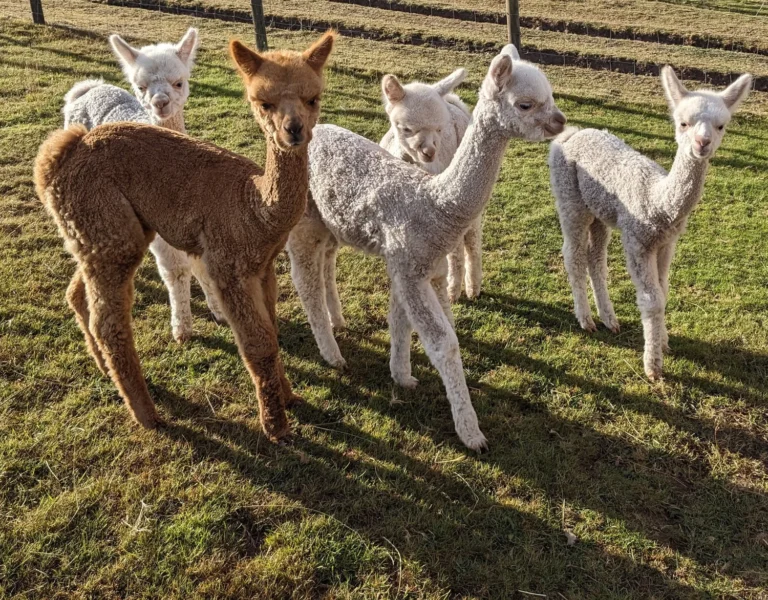
Alpaca Herd for Sale: How to Choose the Right Herd for Your Farm
Buying an entire herd is very different from buying one alpaca.
When you search for an alpaca herd for sale, you are not simply choosing individual animals. You are potentially buying an established group with its own genetics, ages, relationships, breeding history, health records, and management requirements.
That can be a major advantage.
Instead of spending years building a herd one animal at a time, you may be able to acquire several alpacas together and start working toward your goals immediately.
But there is another side to the decision.
A herd can look impressive in photographs while having weaknesses that are difficult to notice at first glance.
Some animals may be older than expected.
Some may have limited breeding history.
The genetics may not complement one another.
Records may be incomplete.
Transportation can also become more complicated when multiple animals are involved.
That is why buying an alpaca herd for sale deserves careful planning.
The goal is not simply to find the largest group or the cheapest package.
The goal is to find a healthy, compatible, well-documented herd that makes sense for your property and your long-term plans.
Why Buy an Entire Alpaca Herd?
There are several reasons livestock buyers search for an alpaca herd for sale.
A new farmer may want to get started quickly.
An established breeder may want to expand.
A fiber producer may want more animals.
Another buyer may want to acquire proven genetics without spending years building a breeding program.
Buying multiple alpacas together can also simplify the process of establishing a social group.
Instead of purchasing one animal and then searching for companions, you may be able to bring home an existing group.
Of course, every situation is different.
The quality of the herd matters much more than the number of animals included.
What Makes a Good Herd?
A good alpaca herd for sale should be evaluated as a group and as individual animals.
Look at the overall health of the herd.
Then examine each alpaca.
Consider age distribution.
Study the genetics.
Review reproductive history.
Look at fleece quality.
Check documentation.
Consider temperament.
You should also think about whether the animals complement each other.
A herd with several excellent animals can still be a poor purchase if the animals do not fit your breeding goals.
Start With Your Goals
Before searching for an alpaca herd for sale, decide what you want to accomplish.
Are you building a breeding operation?
Do you want fiber production?
Are you establishing a small farm?
Do you want registered animals?
Are you interested in Huacaya alpacas, Suri alpacas, or both?
Will you eventually sell offspring?
Will showing animals be part of your business?
Your answers will determine what kind of herd makes sense.
A herd that is perfect for one buyer may be completely unsuitable for another.
Buying a Herd vs. Buying Individual Alpacas
Buying an alpaca herd for sale can save time, but individual purchases provide more flexibility.
When buying individually, you can select animals based on specific traits.
You can gradually develop your bloodlines.
You can spread purchases over time.
With a complete herd, you may acquire animals you would not have selected individually.
That is not necessarily bad.
The important question is whether the entire package works for you.
Never assume that a herd is automatically a bargain simply because several animals are being sold together.
Evaluate Every Animal
When considering an alpaca herd for sale, do not evaluate the group only from a distance.
Each animal deserves attention.
Look at body condition.
Observe movement.
Examine fleece.
Check identification.
Ask about age.
Review health information.
Consider temperament.
An established herd may contain animals at very different stages of life.
That can influence its value considerably.
Look at the Age Distribution
Age is an important factor in an alpaca herd for sale.
A herd made entirely of very young animals has different potential from one containing proven adult females.
Similarly, a group with several older animals may have lower future breeding potential than the listing initially suggests.
Ask for the exact birth date of every animal.
Do not rely only on descriptions such as “young,” “mature,” or “proven.”
Actual dates are much more useful.
Young Alpacas
Young animals can provide exciting future potential.
When evaluating an alpaca herd for sale containing youngsters, look at their parents and family history.
Study current development.
Ask about their fleece.
Review health records.
Young alpacas have plenty of development ahead of them, so avoid treating current appearance as a guarantee of future performance.
Mature Females
Mature females can be particularly valuable in an alpaca herd for sale intended for breeding.
Ask about reproductive history.
How many crias has each female produced?
Were pregnancies successful?
How were previous offspring?
Has the female had reproductive problems?
A proven female can provide information that a young, unproven animal simply cannot.
Breeding Males
A breeding male can have an enormous influence on a herd.
When evaluating an alpaca herd for sale, pay close attention to the males included.
Study their pedigree.
Look at their fleece.
Examine conformation.
Ask about offspring.
Find out whether they have been used successfully for breeding.
If a male is advertised as an exceptional sire, ask what evidence supports that claim.
Genetics and Bloodlines
Genetics are one of the biggest reasons to purchase an alpaca herd for sale.
A group of animals may contain valuable bloodlines that would take years to assemble individually.
But genetics need to be studied carefully.
Look for relationships among the animals.
Make sure you understand which animals are related.
If you intend to breed them, plan pairings carefully to avoid unsuitable matings.
A qualified breeder or genetics professional can help with this process.
Review the Pedigrees
Ask to see pedigree information for every relevant animal in an alpaca herd for sale.
Compare parents.
Look at grandparents when records are available.
Pay attention to recurring bloodlines.
Consider what characteristics those bloodlines are known for.
Pedigree alone does not guarantee quality.
It is one piece of the overall selection process.
Registered Herds
Some buyers specifically search for a registered alpaca herd for sale.
Registration can provide useful documentation about identity and ancestry.
If registration matters to your business, verify the paperwork carefully.
Make sure identification numbers match the animals.
Ask the seller how ownership transfers are handled.
Keep copies of relevant documents.
Do not assume that registration automatically means every animal is superior.
Health, conformation, fleece, genetics, and performance still matter.
Health Should Be Your First Filter
Before discussing price, evaluate health.
A beautiful alpaca herd for sale is not a good investment if the animals have unresolved health problems.
Observe the herd.
Do the animals appear alert?
Are they moving normally?
Do they have appropriate body condition?
Does the environment appear clean and well managed?
Ask about veterinary care.
Request relevant records.
Ask whether any animal has ongoing health concerns.
If possible, have your veterinarian participate in the evaluation.
Request Health Records
Good documentation can make an alpaca herd for sale much easier to evaluate.
Ask for available records covering:
- Identification
- Birth dates
- Vaccination history
- Veterinary visits
- Health problems
- Treatments
- Reproductive history
- Parentage
- Registration
Records are especially important when purchasing multiple animals.
You want to know the history of the herd rather than starting from scratch after bringing it home.
Inspect the Herd in Person
An online listing can help you discover an alpaca herd for sale, but an in-person visit is much more valuable.
Walk through the herd.
Watch the animals move.
Observe how they interact.
Look at their environment.
Talk with the seller.
Ask questions.
Take notes.
If you are inexperienced, bring someone who understands alpacas.
A second set of eyes can notice things you may overlook.
Don’t Rely on Photos
Photos are helpful, but they can be flattering.
When considering an alpaca herd for sale, remember that lighting, camera angles, and selective photographs can influence how animals appear.
Ask for recent photographs.
Request full-body images.
Ask to see the animals standing naturally.
Video can also be useful because it allows you to observe movement.
Still, nothing replaces a proper inspection.
Evaluate Fleece Quality
Fleece is central to many alpaca operations.
When examining an alpaca herd for sale, study the fleece of individual animals.
Depending on your goals, consider:
- Fineness
- Density
- Crimp
- Staple length
- Uniformity
- Luster
- Lock structure
The importance of each trait depends on the type of alpaca and your intended market.
Huacaya Herds
Huacaya alpacas are recognized for their dense, crimped fleece.
If you are evaluating a Huacaya alpaca herd for sale, look for consistency throughout the group.
Study individual fleeces.
Look at density.
Consider crimp structure.
Ask about previous fleece testing if available.
Do not rely on touch alone.
Objective information can be useful when comparing animals.
Suri Herds
Suri alpacas have distinctive locks and luster.
When considering a Suri alpaca herd for sale, examine lock structure carefully.
Ask about the history of the animals.
Look at parents and offspring.
If you are unfamiliar with Suri fleece, experienced advice can be extremely helpful.
Consider the Herd’s Color
Color may influence the value of an alpaca herd for sale depending on your market.
Some breeders focus on natural colors.
Others prefer specific breeding goals.
If color is important to you, study the animals individually and review their pedigrees.
Do not make color the only deciding factor.
A healthy, well-structured animal with strong genetics may be more valuable to your program than an animal selected only for its shade.
Temperament Matters
A herd’s temperament can affect daily management.
When viewing an alpaca herd for sale, observe how the animals respond to people.
Are they reasonably calm?
Are they accustomed to handling?
Are they extremely difficult to move?
Do they show unusual aggression or excessive fear?
Every animal has a different personality.
Still, knowing the general temperament of a herd can help you anticipate management needs.
Ask Why the Herd Is Being Sold
This is one of the most important questions to ask.
When considering an alpaca herd for sale, ask the seller why the animals are being offered.
There are many legitimate reasons.
A breeder may be retiring.
A farm may be downsizing.
The owner may be changing direction.
The property may be changing hands.
The answer does not automatically make the herd good or bad.
However, it provides useful context.
Evaluate the Farm Where the Herd Lives
The current environment can tell you a lot.
When visiting an alpaca herd for sale, look around the property.
Is the fencing maintained?
Are shelters suitable?
Are water sources clean?
Are the animals appropriately managed?
Does the herd appear generally healthy?
Good management practices do not guarantee perfect animals, but they provide valuable context.
Reproductive History
If breeding is your goal, reproductive records are essential.
When evaluating an alpaca herd for sale, ask about each breeding female.
Review:
- Number of pregnancies
- Number of crias
- Birth history
- Previous reproductive problems
- Current reproductive status
Ask similar questions about breeding males.
Proven performance can be an important part of herd value.
Crias and Offspring
Ask whether the seller has previous offspring from the herd.
If possible, see them.
When evaluating an alpaca herd for sale, offspring can provide valuable evidence about the traits being passed down.
Look at their fleece.
Observe structure.
Ask about health and development.
A breeder who keeps good offspring records can provide particularly useful information.
Herd Compatibility
A herd is more than a collection of animals.
The animals may have lived together for years.
That social history matters.
When purchasing an alpaca herd for sale, ask whether the animals have been managed as one group.
Find out whether they have a stable social structure.
This information can help you plan the move.
Transportation Planning
Moving one alpaca is one thing.
Moving an entire herd is another.
Before buying an alpaca herd for sale, plan transportation carefully.
Consider:
- Number of animals
- Distance
- Trailer requirements
- Loading arrangements
- Weather
- Travel time
- Rest and water requirements
- Destination facilities
Use appropriate livestock transportation and seek professional advice where necessary.
Prepare the New Property
Do not wait until the purchase is complete.
Before bringing home an alpaca herd for sale, prepare your property.
Check fencing.
Prepare shelters.
Arrange water.
Prepare feeding areas.
Set up quarantine facilities if advised by your veterinarian.
Make sure you have enough space for the entire group.
Moving animals into an unprepared environment creates unnecessary stress.
Quarantine New Animals
If you already own livestock, discuss quarantine with your veterinarian before adding an alpaca herd for sale to your property.
Even animals that appear healthy can introduce health concerns.
A veterinarian can help you establish an appropriate quarantine protocol.
The exact approach will depend on your herd, location, and veterinary advice.
Feeding a New Herd
Ask the seller what the animals currently eat.
When bringing home an alpaca herd for sale, avoid unnecessary sudden dietary changes.
Learn about their forage.
Ask about supplements.
Discuss their routine with your veterinarian or livestock nutrition professional.
Gradual transitions can make the adjustment easier.
Budget Beyond the Purchase Price
The price of an alpaca herd for sale is only one part of the investment.
Remember ongoing costs such as:
- Feed
- Hay
- Veterinary care
- Shearing
- Transportation
- Fencing
- Shelter
- Water systems
- Equipment
- Labor
- Farm maintenance
A larger herd naturally requires more resources.
Calculate your expected annual expenses before committing.
Is Buying a Herd Cheaper?
Sometimes.
Sometimes it is not.
An alpaca herd for sale may be priced attractively because the seller wants to transfer several animals at once.
But do not assume a group discount automatically represents good value.
Calculate the approximate value of each animal.
Then consider the additional value of proven genetics, reproductive history, registration, and established relationships.
Red Flags to Watch For
Be cautious when evaluating an alpaca herd for sale if the seller:
- Cannot provide basic records
- Refuses an in-person inspection
- Cannot explain the animals’ ages
- Makes extreme claims about breeding value
- Pressures you to pay immediately
- Provides inconsistent information
- Refuses reasonable health questions
- Cannot clearly identify individual animals
One concern does not necessarily mean you should walk away.
Several concerns deserve serious attention.
Ask for Individual Identification
Every animal in an alpaca herd for sale should be clearly identifiable.
Ask how each alpaca is identified.
Compare identification with paperwork.
Create your own records after purchase.
This becomes particularly important when several animals have similar colors or appearances.
Make a Herd Inventory
Before buying an alpaca herd for sale, create a simple inventory.
For each animal, record:
| Information | Details |
|---|---|
| Name/ID | Individual identification |
| Sex | Male or female |
| Birth date | Exact date |
| Color | Current color |
| Type | Huacaya or Suri |
| Registration | If applicable |
| Sire | Father |
| Dam | Mother |
| Health history | Available records |
| Breeding history | If applicable |
| Fleece notes | Important characteristics |
This makes comparison much easier.
Choose Quality Over Quantity
A large alpaca herd for sale may look impressive.
But bigger does not always mean better.
A smaller group with excellent genetics, strong health, useful reproductive history, and good documentation may be more valuable than a large group containing many average animals.
Think about what each animal contributes.
Every animal should have a reason for being part of your future herd.
Building a Breeding Strategy
If you are buying an alpaca herd for sale for breeding, think beyond the first generation.
Study bloodlines.
Identify strengths.
Identify weaknesses.
Decide which traits you want to improve.
Plan future pairings carefully.
Avoid breeding simply because animals are available.
A thoughtful breeding strategy can help your herd become stronger over time.
Keep Detailed Records After Purchase
Once you purchase an alpaca herd for sale, maintain good records from day one.
Record health events.
Track births.
Document breeding.
Monitor fleece.
Record weights or body condition when appropriate.
Keep registration documents organized.
Good records turn a collection of animals into a manageable breeding and livestock program.
Marketing Your Own Herd
If you eventually list an alpaca herd for sale, transparency will help attract serious buyers.
Create individual profiles.
Use recent photographs.
Provide accurate ages.
Include pedigree information.
Explain reproductive history.
Mention registration.
Be honest about health history.
Clear information creates confidence.
Writing Better Herd Listings
A strong listing for an alpaca herd for sale should answer the questions buyers are most likely to ask.
Include:
- Number of animals
- Sex of each animal
- Ages
- Breed type
- Colors
- Registration
- Parentage
- Health information
- Reproductive history
- Fleece characteristics
- Location
- Transportation information
- Asking price or purchasing details
Avoid vague descriptions.
Specific details make your listing much more useful.
Local Search and SEO
If you sell an alpaca herd for sale, local SEO can help buyers discover your farm.
Potential searches may include:
- Alpaca herd for sale near me
- Alpaca herds for sale
- Alpaca farm for sale
- Alpaca breeder near me
- Alpacas for sale
- Registered alpacas for sale
- Alpaca breeding stock
- Alpaca breeding stock for sale
- Huacaya alpacas for sale
- Suri alpacas for sale
Build useful pages around these searches.
Keep your content natural.
Avoid stuffing the exact same keyword into every sentence.
A helpful article should serve the buyer first.
Frequently Asked Questions
What should I look for in an alpaca herd for sale?
Look at individual health, age, genetics, pedigree, fleece, conformation, temperament, reproductive history, registration, and overall herd compatibility.
Is buying an entire alpaca herd a good idea?
It can be, particularly when the animals fit your goals. However, every animal should be evaluated before you purchase the group.
Is a registered herd better?
Registration provides useful documentation, particularly for breeding programs. It does not automatically guarantee superior health or quality.
Should I buy a herd for breeding?
If breeding is your goal, study genetics, reproductive records, pedigree, conformation, fleece, and the quality of previous offspring.
How much does an alpaca herd cost?
There is no standard price. Value depends on the number of animals, age, genetics, registration, fleece, reproductive history, health, and seller.
Can I move an entire herd to a new farm?
Yes, but transportation requires planning. Consider animal numbers, distance, weather, suitable equipment, and destination facilities.
Should I inspect an alpaca herd before buying?
Yes. An in-person inspection is strongly preferable. If you cannot visit, consider having an experienced alpaca professional inspect the animals.
What records should the seller provide?
Useful records may include identification, birth dates, registration, parentage, health information, veterinary history, and reproductive records.
How many alpacas should I buy?
There is no universal number. Your available land, budget, facilities, management experience, and long-term goals should determine herd size.
Can I mix a purchased herd with my existing alpacas?
Potentially, but introductions should be managed carefully. Discuss quarantine and herd integration with your veterinarian.
Final Thoughts
Buying an entire herd can be one of the biggest decisions you make as an alpaca owner.
It can also be one of the most rewarding.
The right alpaca herd for sale can give a new farm an immediate foundation.
It can provide established genetics.
It can include proven females.
It may offer breeding males, young animals, fiber-producing stock, and years of valuable history.
But the wrong purchase can become expensive very quickly.
That is why patience matters.
Visit the farm.
Ask difficult questions.
Study the records.
Inspect individual animals.
Look at the parents.
Understand the genetics.
Review reproductive history.
Evaluate fleece.
Consider temperament.
Calculate the ongoing costs.
And think about what you want your herd to become five or ten years from now.
Do not let the size of an alpaca herd for sale distract you from quality.
Ten suitable animals may be more valuable to your operation than twenty animals that do not fit your goals.
Likewise, a smaller group with excellent genetics and proven performance may provide a stronger foundation than a much larger group purchased simply because the price looks attractive.
Your goal should be simple: buy animals that make sense for your farm.
With careful research, realistic budgeting, good records, and responsible animal management, an established alpaca herd can become the starting point for a productive and enjoyable livestock operation.