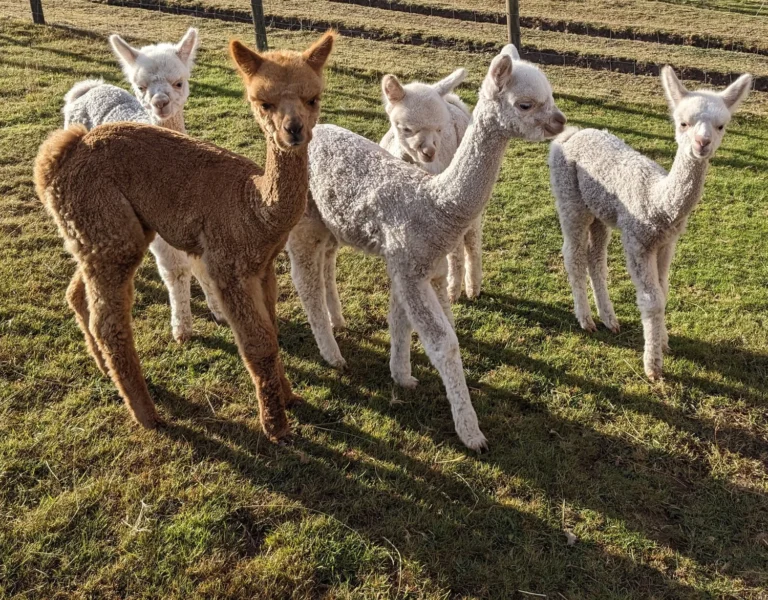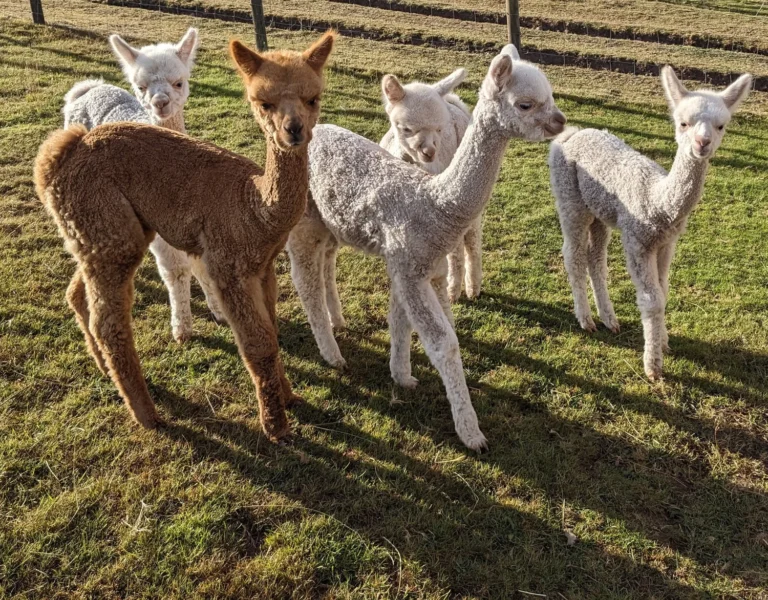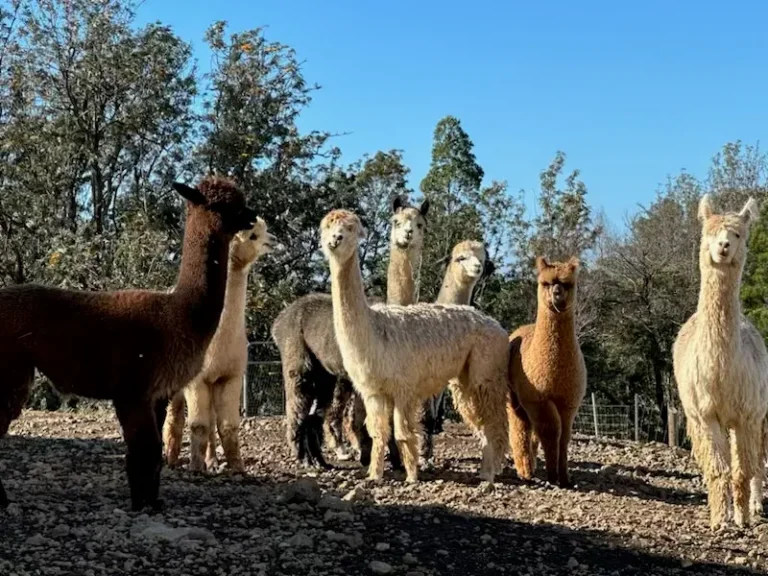
Alpaca Herd for Sale: How to Choose the Right Herd for Your Farm
Buying an entire alpaca herd is a very different experience from buying one or two animals.
You are not simply choosing individual alpacas.
You are buying a group with an existing history, genetic relationships, management routine, and breeding potential.
That is why anyone searching for an alpaca herd for sale should slow down and look at the bigger picture.
A herd may look impressive in photographs.
But photographs do not tell you everything.
You need to understand the animals, their health, their genetics, their ages, their breeding history, and the reason the herd is being sold.
You also need to think about your own farm.
Do you have enough pasture?
Is your fencing ready?
Can you handle the daily care?
Do you have access to veterinary support?
What will you do with the herd once it arrives?
These questions matter because buying an alpaca herd for sale is a long-term commitment.
The right herd can give you a strong foundation.
The wrong herd can create years of unnecessary expense and management challenges.
This guide explains what to look for, what questions to ask, and how to approach the purchase with confidence.
Why Buy an Entire Alpaca Herd?
There are several reasons someone might search for an alpaca herd for sale instead of buying individual animals.
Perhaps you are starting an alpaca farm.
Maybe an established breeder is retiring.
You may want to expand an existing operation quickly.
You could be interested in acquiring an established breeding program.
Or perhaps you want a group of animals with known relationships and management history.
Buying a complete herd can sometimes save time.
Instead of building a herd one animal at a time, you begin with an established group.
That can be attractive to experienced livestock owners.
Know What You Are Actually Buying
When you find an alpaca herd for sale, do not think of it as one product.
Think of it as multiple individual animals being sold together.
Each alpaca deserves attention.
You should know the age, sex, health status, pedigree, and breeding history of the animals involved.
The herd as a whole also needs to make sense.
A seller may describe the group as a breeding herd, fiber herd, foundation herd, or established operation.
Ask what those descriptions actually mean.
Define Your Goals Before Shopping
Before looking seriously at an alpaca herd for sale, decide what you want the herd to accomplish.
Are you interested in breeding?
Do you want fiber production?
Are you starting a family farm?
Do you want to show animals?
Are you building a commercial operation?
Perhaps you simply want a diverse group of alpacas for your property.
Your goals will determine what kind of herd makes sense.
A fiber-focused buyer may prioritize fleece.
A breeding operation may emphasize genetics and reproductive history.
A beginner may place greater emphasis on manageable animals and strong health records.
Look at the Herd as a Whole
One of the biggest mistakes buyers make is falling in love with one alpaca.
When evaluating an alpaca herd for sale, step back.
Look at the entire group.
Are the animals generally healthy?
Do they have reasonable body condition?
Are they alert?
Do they move comfortably?
Are there different age groups?
Are the females productive?
Are there breeding males?
Does the herd have a clear genetic direction?
These questions help you determine whether the herd is actually suitable for your plans.
Health Should Come First
A herd with beautiful fleece and impressive pedigrees is still a poor investment if health management has been neglected.
When considering an alpaca herd for sale, ask for available health records.
Find out about veterinary care.
Ask about vaccinations and parasite management appropriate to the operation.
Ask whether there have been significant health problems.
Discuss any testing or screening that has been performed.
For a substantial purchase, an independent veterinary assessment can be extremely valuable.
Inspect Individual Animals
Even though you are buying a herd, each alpaca matters.
When inspecting an alpaca herd for sale, make notes on individual animals.
Look at body condition.
Watch movement.
Check general appearance.
Observe behavior.
Look at fleece.
Ask about age.
Identify breeding animals.
This helps prevent a situation where a strong-looking herd hides several animals that do not fit your requirements.
Check the Ages
Age distribution is important when evaluating an alpaca herd for sale.
A herd made entirely of older animals may require a different strategy from a herd with young females and established breeding animals.
Ask for the birth dates of all animals.
Separate the herd into categories.
For example:
- Young animals
- Mature females
- Mature males
- Proven breeding animals
- Unproven breeding prospects
- Retired or non-breeding animals
This gives you a clearer picture of what you are actually purchasing.
Examine the Breeding Females
If you are considering an alpaca herd for sale for breeding, females deserve special attention.
Ask about reproductive history.
How many crias has each female produced?
Has she had successful pregnancies?
How has she performed as a mother?
Are there gaps in her breeding history?
Has she experienced reproductive problems?
You do not need every female to have an identical history.
But you should understand the herd’s reproductive performance.
Evaluate the Breeding Males
A breeding male can influence many future generations.
When examining an alpaca herd for sale, ask which males are actively used for breeding.
Determine whether they are proven or unproven.
If they have offspring, study those offspring.
Look for consistency in fleece, structure, and other traits relevant to your goals.
A breeding male should have a clear role within your program.
Study the Pedigrees
Pedigrees can be especially important when purchasing an alpaca herd for sale.
A pedigree can help you understand the genetic background of individual animals.
Look at sires.
Look at dams.
Review family lines.
Ask the seller which traits are associated with important bloodlines.
You may discover that several animals share close ancestry.
That information matters when planning future matings.
Avoid Unplanned Inbreeding
Buying a complete herd means you may acquire animals with existing genetic relationships.
When purchasing an alpaca herd for sale, understand those relationships before planning future breeding.
Ask for complete pedigree information where available.
Create a simple family tree if necessary.
If you are unfamiliar with managing breeding relationships, work with an experienced breeder or appropriate livestock professional.
The goal is to make deliberate mating decisions rather than discovering genetic relationships after breeding has already occurred.
Proven vs. Unproven Animals
A herd may contain both proven and unproven animals.
When evaluating an alpaca herd for sale, determine which animals have already produced offspring.
A proven female gives you information about her reproductive history.
A proven male gives you information about his offspring.
Young, unproven animals can still be valuable.
They simply involve greater uncertainty.
Understand what you are paying for.
Fleece Quality Across the Herd
If fiber is important to you, evaluate fleece throughout the herd.
When reviewing an alpaca herd for sale, do not judge fleece based on one exceptional animal.
Look for consistency.
Examine fineness.
Consider density.
Look at crimp in Huacaya animals.
Consider lock structure and luster in Suri animals.
Look at color.
Ask whether fleece records exist.
The herd’s overall fleece profile may be more important than one standout individual.
Huacaya Herds
Huacaya alpacas are commonly associated with dense, crimped fleece.
If you are searching for an alpaca herd for sale containing primarily Huacaya animals, ask about fleece characteristics throughout the group.
Look for consistency.
Ask about the parents of key breeding animals.
If possible, examine previous offspring.
This can help you understand what the genetics are producing rather than simply what they look like today.
Suri Herds
Suri alpacas have a distinctive fleece structure.
Their long locks and characteristic luster are attractive to many fiber enthusiasts.
When considering an alpaca herd for sale made up of Suri animals, evaluate lock structure, luster, density, fineness, and consistency.
Ask how the seller manages and markets the fleece.
Understanding the herd’s current fiber program can help you decide whether it fits your plans.
Consider Color
Color can be an important factor.
When looking at an alpaca herd for sale, determine which natural colors are represented.
Perhaps the herd has a strong focus on one color.
Maybe it includes several shades.
Your preferred approach depends on your market and breeding strategy.
However, do not allow color to overshadow health and overall quality.
A beautiful color does not compensate for poor structure or inadequate management.
Ask Why the Herd Is Being Sold
This may be one of the most important questions you ask.
When you find an alpaca herd for sale, ask the owner why they are selling the group.
There are many legitimate reasons.
The owner may be retiring.
They may be moving.
They may be changing their agricultural plans.
They may be reducing their operation.
They may want to focus on another bloodline.
The answer does not need to be alarming.
You simply want a clear explanation.
Look at the Farm
If possible, visit the farm before buying an alpaca herd for sale.
You are evaluating more than the animals.
Look at the pasture.
Look at the fencing.
Check water access.
Observe shelter.
Look at manure management.
Watch how the herd behaves.
Talk with the owner.
A farm visit can reveal details that never appear in an online listing.
Observe the Herd’s Behavior
Behavior can tell you something about management.
When visiting an alpaca herd for sale, watch how the animals respond to people.
Are they extremely nervous?
Are they manageable?
Do they move calmly?
How do they react when the owner enters the pasture?
Temperament varies between individual animals.
The important thing is understanding what you are taking on.
Ask About Handling
Handling becomes part of everyday livestock management.
When considering an alpaca herd for sale, ask how the animals behave during:
- Shearing
- Veterinary examinations
- Transport
- Routine handling
- Foot care
- Weighing
- Breeding management
A herd that is accustomed to sensible handling can be easier to manage.
Shearing History
Ask when the animals were last shorn.
When evaluating an alpaca herd for sale, find out whether the seller follows a consistent shearing schedule.
If fiber is important, ask whether the seller keeps fleece records.
Find out how fleece is stored.
Ask whether it is sold, processed, or simply kept.
These details can help you understand the herd’s practical value.
Nutrition and Feeding
Before purchasing an alpaca herd for sale, ask what the animals currently eat.
Find out about:
- Pasture
- Hay
- Minerals
- Supplements
- Feeding schedules
- Seasonal changes
When the herd arrives at your property, avoid abrupt changes without a proper transition plan.
Discuss nutrition with a veterinarian or qualified livestock professional.
Prepare Your Property
One of the biggest practical challenges of buying an alpaca herd for sale is preparing enough space.
Do not calculate only for today’s herd.
Think about future growth.
If breeding is part of the plan, the herd may become larger.
Make sure your property can comfortably support the animals.
Fencing Requirements
Before bringing an alpaca herd for sale home, inspect your fencing.
Check the entire perimeter.
Repair damaged areas.
Secure gates.
Remove hazards.
Look for gaps.
Good fencing makes herd management easier and helps protect animals from outside threats.
Shelter and Shade
Your shelter needs depend on your location.
When preparing for an alpaca herd for sale, consider heat, rain, wind, and seasonal conditions.
Shade and ventilation can be especially important in hot environments.
Dry shelter and good drainage matter in wet conditions.
Cold or windy areas may require additional protection.
Design your facilities around your local climate.
Water Supply
A larger herd needs a dependable water system.
Before purchasing an alpaca herd for sale, make sure your water supply is sufficient.
Check troughs.
Check automatic waterers if used.
Make sure animals can access water comfortably.
Keep water containers clean.
A reliable water system is one of the foundations of good herd management.
Veterinary Planning
A herd purchase deserves a veterinary plan.
Before buying an alpaca herd for sale, identify a veterinarian who can assist with routine care and unexpected problems.
Discuss herd health.
Ask about quarantine.
Discuss parasite management.
Review preventive care.
If breeding is involved, discuss reproductive management as well.
Quarantine New Herds
If you already own livestock, talk to your veterinarian before introducing an alpaca herd for sale into your existing animals.
New arrivals may require quarantine and health monitoring.
This is especially important when bringing animals from another farm.
Your veterinarian can recommend a suitable approach based on the animals, your existing herd, and local conditions.
Transportation Can Be Complicated
Moving an entire herd is more complicated than moving one alpaca.
When purchasing an alpaca herd for sale, plan transportation early.
Determine the number of animals.
Consider their sizes and ages.
Plan loading.
Consider travel distance.
Check weather conditions.
Confirm who is responsible for transportation.
Do not leave these details until the last minute.
Calculate the Full Purchase Cost
The advertised price is only part of the equation.
When considering an alpaca herd for sale, calculate:
Purchase price + transportation + veterinary costs + facility preparation + feed + ongoing management.
This gives you a much more realistic budget.
A herd that appears inexpensive can become expensive if your property needs major upgrades.
Why Herd Prices Vary
Prices for an alpaca herd for sale can differ substantially.
Factors may include:
- Number of animals
- Age distribution
- Pedigree
- Registration
- Genetics
- Fleece quality
- Breeding history
- Number of proven animals
- Offspring performance
- Color
- Location
- Farm infrastructure
- Equipment included in the sale
Always ask what exactly is included.
Is Equipment Included?
Sometimes an entire farm operation is being sold rather than simply a group of animals.
When reviewing an alpaca herd for sale, ask whether the transaction includes equipment.
It could potentially include items such as:
- Feed equipment
- Water equipment
- Handling equipment
- Fencing materials
- Shelters
- Fiber equipment
- Records
- Farm infrastructure
Never assume equipment is included.
Get a clear list.
Ask About Records
Records are extremely valuable.
When evaluating an alpaca herd for sale, ask for available documentation.
This may include:
- Animal identification
- Birth dates
- Pedigrees
- Registration information
- Veterinary records
- Breeding records
- Crias
- Fleece records
- Vaccination records
- Ownership documentation
Good records make a herd easier to manage after the purchase.
Registration Matters for Breeding
If your goal is breeding, registration can become particularly important.
When considering an alpaca herd for sale, determine which animals are registered and with which organization.
Verify the documentation.
Make sure the paperwork corresponds to the correct animals.
Ask about transfers.
Keep copies of all relevant records.
Build a Herd Inventory
Before buying an alpaca herd for sale, create an inventory.
For every animal, record:
| Information | Details |
|---|---|
| Name/ID | |
| Age | |
| Sex | |
| Sire | |
| Dam | |
| Registration | |
| Health history | |
| Breeding history | |
| Fleece characteristics | |
| Purchase value |
This makes it much easier to evaluate the entire group.
Identify Your Best Breeding Animals
Once you have reviewed an alpaca herd for sale, separate animals by purpose.
You may have:
Foundation Females
Animals that form the core of your breeding program.
Proven Males
Males with documented offspring.
Young Prospects
Animals that may become valuable breeders in the future.
Fiber Animals
Animals selected primarily for fleece.
Non-Breeding Animals
Animals that may have value but are not part of your breeding strategy.
This classification can help you plan.
Do Not Breed Every Animal
Owning an alpaca herd for sale does not mean every animal should automatically enter your breeding program.
Some animals may not complement your genetics.
Others may be better suited to fiber production or companionship.
Breeding should be intentional.
Think about the traits you want to strengthen.
Then select pairings accordingly.
Think About Genetics as a Group
When purchasing an alpaca herd for sale, genetics become especially important.
You are acquiring multiple animals at once.
Some may be related.
Some may share bloodlines.
You need to understand those relationships before planning future matings.
If necessary, work with an experienced breeder or appropriate genetics professional.
Common Mistakes
Buying an entire herd can be exciting.
It can also encourage rushed decisions.
Common mistakes include:
- Buying without inspecting the herd
- Focusing only on price
- Ignoring health records
- Failing to review pedigrees
- Underestimating transportation
- Not preparing enough pasture
- Assuming all animals are breeding quality
- Ignoring herd genetics
- Failing to budget for veterinary care
A checklist can help prevent these mistakes.
Don’t Let One Exceptional Animal Distract You
An alpaca herd for sale may contain one spectacular animal.
That can make the entire group look more attractive.
But ask yourself whether the other animals meet your requirements.
One outstanding male does not automatically make a herd excellent.
One exceptional female does not fix poor herd management.
Evaluate the entire package.
Compare Multiple Herds
If possible, compare more than one alpaca herd for sale.
Create a list of important criteria.
Compare health.
Compare ages.
Compare genetics.
Compare breeding history.
Compare fleece.
Compare infrastructure.
Compare price.
The comparison can make strengths and weaknesses much easier to identify.
Ask the Seller About Weaknesses
This question can be extremely useful:
“What are the weaknesses of this herd?”
A good seller should be able to discuss areas that could be improved.
Perhaps the herd has older females.
Perhaps the genetic diversity is limited.
Perhaps some animals are better suited for fiber than breeding.
Knowing these things allows you to make an informed decision.
Buying an Established Breeding Program
Sometimes an alpaca herd for sale represents much more than livestock.
It may be an established breeding program with years of records.
That can be valuable.
But make sure you understand what you are purchasing.
Are you acquiring only animals?
Are records included?
Are breeding names or registrations transferable?
Is equipment included?
Are customers or fiber relationships part of the transaction?
Get everything clearly defined.
Think About the Future
Before purchasing an alpaca herd for sale, imagine your operation three years from now.
How many animals will you have?
How many females will be breeding?
How many crias might you have?
Where will you keep young animals?
How much pasture will you need?
How will you manage fiber?
Thinking ahead can prevent serious overcrowding and management problems.
A Simple Buying Checklist
Before purchasing an alpaca herd for sale, review these areas.
Herd Health
- Veterinary records
- Body condition
- Movement
- General appearance
- Preventive care
Genetics
- Pedigrees
- Parentage
- Related animals
- Proven breeding animals
- Future breeding potential
Fleece
- Fineness
- Density
- Crimp or lock
- Uniformity
- Color
Management
- Pasture
- Fencing
- Shelter
- Water
- Feeding
Financial Planning
- Purchase price
- Transportation
- Veterinary costs
- Feed
- Facility upgrades
- Ongoing expenses
If the important answers are clear, you are in a much stronger position to make a decision.
Frequently Asked Questions
What should I look for when buying an alpaca herd?
Look at the health, age, genetics, breeding history, fleece quality, temperament, registration, and management history of every animal. Also evaluate the herd as a group.
Is buying an entire alpaca herd a good idea?
It can be, especially if you want to establish or expand an operation quickly. However, the herd needs to fit your property, budget, management skills, and long-term goals.
How much does an alpaca herd cost?
There is no universal price. The value of an alpaca herd for sale depends on the number of animals, genetics, age, registration, breeding history, fleece quality, infrastructure, and other factors.
Should I buy a herd from a retiring breeder?
A retiring breeder can potentially offer an established group with useful records and known history. Ask why the herd is being sold and carefully review the animals and documentation.
Can I buy a herd online?
Online listings can help you locate an alpaca herd for sale, but a complete herd purchase should ideally involve an in-person inspection and thorough review of records.
Should every animal in the herd be registered?
That depends on your goals. Registration may be particularly valuable for breeding operations, but the importance varies depending on how you plan to use the animals.
How important is pedigree?
Pedigree can be very important when building a breeding program. It helps you understand ancestry and plan future matings. However, pedigree should be considered alongside health and physical characteristics.
What should I ask the seller?
Ask why the herd is being sold, its health history, breeding history, pedigrees, ages, fleece characteristics, feeding routine, management practices, registration status, and what is included in the purchase.
How should I prepare my farm?
Prepare secure fencing, suitable pasture, shelter, clean water, feed, quarantine facilities where appropriate, transportation arrangements, and veterinary support.
Can I introduce a purchased herd to my existing alpacas immediately?
You should discuss quarantine and introduction procedures with your veterinarian. New livestock should not automatically be mixed with an established herd.
Is a proven breeding male important?
A proven male can provide valuable information because his offspring demonstrate what he may pass on. However, an unproven male can also have strong potential.
What if I find a herd that is larger than my property can support?
Do not purchase simply because the price looks attractive. Your property should be capable of supporting the animals comfortably. Consider whether the seller is willing to divide the herd or whether another opportunity would be more appropriate.
Final Thoughts
Finding an alpaca herd for sale can be the beginning of something much bigger than a simple livestock purchase.
It can be the foundation of a farm.
It can give you established genetics.
It can provide breeding opportunities.
It can introduce you to fiber production.
It can save years of slowly building a herd from scratch.
But the size of the purchase makes careful research even more important.
Look at every animal.
Study the pedigrees.
Review the health records.
Ask about breeding performance.
Examine fleece.
Visit the property.
Talk to the seller.
Understand the reason for the sale.
Calculate transportation and ongoing costs.
Most importantly, think about whether the herd fits your vision.
The best alpaca herd for sale is not necessarily the biggest one.
It is not necessarily the cheapest one.
And it is not necessarily the herd with the most impressive advertisement.
It is the herd that matches your goals, property, budget, experience, and long-term plans.
Take your time.
Do the research.
Ask difficult questions.
Get professional advice when necessary.
And never be afraid to walk away from a herd that does not make sense.
A well-chosen herd can become the foundation of a healthy and rewarding alpaca operation.
The decision you make today can influence your farm for many years, so make it carefully