Alpaca Farms Near Me: How to Find the Right Farm, Visit With Confidence, and Choose the Best Alpacas
Finding the right alpaca farm can feel surprisingly personal.
You are not simply shopping for an animal.
You are looking at a farm, meeting the people who care for the animals, seeing how the herd is managed, and trying to decide whether the experience feels right.
That is why so many buyers begin their search by typing alpaca farms near me into Google.
Being close to a farm has obvious advantages.
You can visit more easily.
You can see animals in person.
You can ask questions face to face.
You may even develop a relationship with the breeder after bringing an alpaca home.
But the closest farm is not necessarily the best farm.
When searching for alpaca farms near me, you want to look beyond distance and consider animal health, breeding practices, fleece quality, facilities, reputation, records, pricing, and your own goals.
Whether you are buying your first alpaca, expanding an existing herd, looking for breeding stock, or simply interested in learning more about alpacas, this guide will help you approach the process with confidence.
Why Search for Alpaca Farms Near Me?
There is a good reason local searches are popular.
When someone searches for alpaca farms near me, they are usually looking for something they can actually visit.
That matters with livestock.
Photos are helpful.
Videos are useful.
Descriptions can provide information.
But nothing replaces standing in a pasture and seeing the animals yourself.
A local farm gives you the opportunity to observe the herd, talk with the owner, and ask questions before making a commitment.
What Can You Find at a Local Alpaca Farm?
Not every farm offers the same things.
Some alpaca farms near me may focus heavily on breeding.
Others may specialize in fiber.
Some may have registered animals.
Others may simply maintain small private herds.
Depending on the farm, you might find:
- Alpacas for sale
- Breeding stock
- Young alpacas
- Crias
- Huacaya alpacas
- Suri alpacas
- Fiber
- Yarn
- Farm products
- Educational experiences
- Farm visits
- Herd packages
Always contact the farm beforehand if you are looking for something specific.
Decide What You Want Before Visiting
Before visiting alpaca farms near me, think about why you want an alpaca.
Your goal will influence which animals you should consider.
Perhaps you want to start breeding.
Maybe you are interested in fleece.
Perhaps you want a few alpacas for your property.
You could be searching for registered animals.
Maybe you are simply exploring the possibility of becoming an alpaca owner.
There is no wrong answer.
But knowing your goal will make the search much easier.
Buying Your First Alpaca
First-time buyers often feel overwhelmed.
There are unfamiliar terms.
There are different bloodlines.
There are different fleece characteristics.
There are questions about feeding, shelter, fencing, veterinary care, and shearing.
Visiting alpaca farms near me can help turn those questions into something much more practical.
You can see how alpacas behave.
You can observe their environment.
You can speak with experienced owners.
You can learn what everyday alpaca care actually looks like.
Don’t Choose a Farm Only Because It Is Close
Distance is convenient, but quality matters more.
When comparing alpaca farms near me, consider several factors at once.
Look at:
Animal health
Do the alpacas appear healthy and well maintained?
Breeding quality
Does the farm have a clear breeding program?
Records
Are pedigree and health records available?
Facilities
Does the farm provide appropriate shelter, fencing, pasture, and water?
Communication
Does the breeder answer questions clearly?
Experience
How long has the farm been working with alpacas?
A slightly longer drive may be worthwhile if the farm is a much better fit.
What to Look for During a Farm Visit
Your first visit to alpaca farms near me should be more than a casual tour.
Take your time.
Observe the surroundings.
Look at the animals before focusing on a particular alpaca.
Notice whether the farm appears organized.
Look at the fencing.
Check the water.
Observe shelter.
Watch how the owner handles the herd.
You are learning about the farm’s management style.
Look at the Entire Herd
One impressive alpaca can make a farm look excellent.
Don’t let one animal make the entire decision for you.
When visiting alpaca farms near me, look at the whole herd.
Do the animals generally appear healthy?
Are they reasonably conditioned?
Are they alert?
Do they move comfortably?
Are the facilities appropriate?
A strong overall herd can tell you something about consistent management.
Observe the Animals’ Behavior
Alpacas have their own personalities.
Some are calm.
Some are curious.
Others are more reserved.
When visiting alpaca farms near me, watch the herd before interacting with it.
Do the animals appear comfortable around people?
How do they respond when the breeder enters the pasture?
How are they moved?
Does the breeder handle them calmly?
You are not necessarily looking for pets.
You are looking for animals that can be managed safely.
Ask About Animal Health
Health should be near the top of your checklist.
When comparing alpaca farms near me, ask the breeder about routine veterinary care and health management.
Ask about available records.
Ask whether the animals have experienced significant health problems.
Ask about preventive practices appropriate to the farm.
For an important purchase, consider discussing an independent veterinary examination with your veterinarian.
Inspect Body Condition
You do not need to be an expert to pay attention to basic appearance.
When visiting alpaca farms near me, look at body condition and general appearance.
Observe the animal’s stance.
Watch it walk.
Look at its coat.
Pay attention to its behavior.
If you see something concerning, ask the breeder about it rather than making your own diagnosis.
A qualified veterinarian can provide professional advice when needed.
Ask About Veterinary Records
Records can tell you a great deal.
A responsible farm should be able to explain its approach to animal care.
When visiting alpaca farms near me, ask what documentation is available for animals you are considering.
Depending on the farm, this may include:
- Identification
- Birth information
- Health history
- Breeding history
- Registration
- Pedigree information
- Fleece records
Keep copies of important documents after purchase.
Learn About the Feeding Program
Every farm may have a slightly different management system.
Ask alpaca farms near me what the animals currently eat.
Find out about pasture.
Ask about hay.
Discuss minerals and supplements.
Ask about seasonal feeding changes.
If you purchase an alpaca, avoid sudden changes in its diet. Discuss an appropriate transition with a veterinarian or qualified livestock professional.
Understand the Two Main Alpaca Types
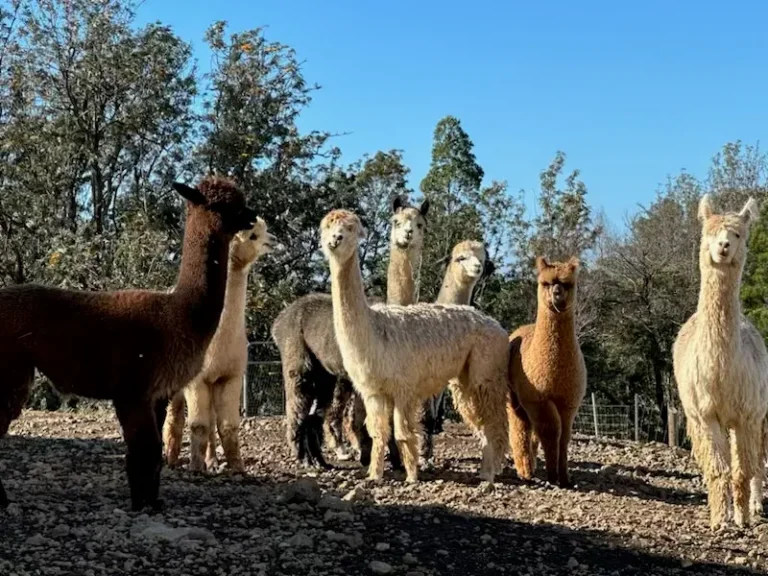
When visiting alpaca farms near me, you will likely encounter Huacaya or Suri alpacas.
They are both alpacas, but their fleece looks different.
Understanding the distinction can help you make a more informed choice.
Huacaya Alpacas
Huacaya alpacas are widely recognized for dense fleece with a crimped appearance.
Buyers interested in fiber often evaluate:
- Fineness
- Density
- Crimp
- Staple characteristics
- Uniformity
- Color
If fiber is your priority, ask the breeder how these traits have influenced their breeding decisions.
Suri Alpacas
Suri alpacas have a distinctive fleece with longer locks and noticeable luster.
When visiting alpaca farms near me that specialize in Suri animals, ask about:
- Lock structure
- Luster
- Fineness
- Density
- Uniformity
- Color
The right choice depends on what you want from your herd.
Choosing an Alpaca for Fiber
If you want alpacas primarily for fiber, tell the breeder.
When comparing alpaca farms near me, ask whether they keep fleece records.
Look at the actual fleece.
Do not rely solely on marketing phrases.
Ask about previous production.
Find out how the fiber is handled after shearing.
Is it sold raw?
Is it processed?
Is it turned into yarn?
Does the farm make finished products?
The answers can help you understand the farm’s fiber operation.
Choosing Alpacas for Breeding
Breeding requires additional research.
When evaluating alpaca farms near me, ask about pedigrees and breeding history.
Find out which animals are proven.
Ask about their offspring.
Look at the traits the breeder is trying to improve.
Think about whether those traits fit your own breeding goals.
A good breeding program is about making deliberate decisions rather than simply putting two animals together.
Why Pedigree Matters
Pedigree can help you understand an animal’s background.
When visiting alpaca farms near me, ask to see pedigree information for breeding animals.
Look at parents.
Consider related animals.
Understand which bloodlines appear throughout the herd.
This becomes especially important when you eventually plan matings.
You want to understand genetic relationships before breeding.
Proven and Unproven Animals
A proven animal has a reproductive history you can evaluate.
For example, a proven female may have successfully produced offspring.
A proven male may have offspring whose characteristics can be studied.
An unproven animal can still be valuable.
Young animals may have considerable potential.
When visiting alpaca farms near me, simply make sure you understand whether you are purchasing demonstrated performance or future potential.
Ask Why an Animal Is for Sale
This question is simple but useful.
Ask the breeder:
“Why are you selling this alpaca?”
There are plenty of legitimate reasons.
The breeder may be reducing the herd.
They may be changing bloodlines.
They may be retiring.
They may have produced offspring they no longer need to retain.
The answer gives you useful context.
Ask About Registration
If registration matters to you, verify it.
When comparing alpaca farms near me, ask which animals are registered and what documentation accompanies them.
Make sure the animal’s identification matches its records.
Ask about transferring ownership.
Keep the paperwork organized after your purchase.
Look at Fleece Quality
Fleece can be one of the biggest reasons people become interested in alpacas.
When visiting alpaca farms near me, take time to examine fleece rather than simply looking at the animal from a distance.
Consider:
- Fineness
- Density
- Uniformity
- Crimp
- Lock structure
- Luster
- Staple characteristics
- Color
Your priorities will depend on whether you want fiber, breeding stock, or both.
Color Can Be Important
Natural alpaca colors range across a broad spectrum.
When visiting alpaca farms near me, tell the breeder if you have a specific color preference.
However, avoid making color your only selection criterion.
A healthy, structurally sound animal with strong genetics may be a better purchase than an animal chosen solely because of its color.
Ask About Shearing
Shearing is part of routine alpaca management.
Ask alpaca farms near me when the animals are normally shorn.
Find out who performs the shearing.
Ask whether the farm keeps fleece records.
If you are buying an alpaca for fiber, ask how the fleece is collected, stored, graded, and marketed.
This can give you a better understanding of the farm’s overall fiber program.
Evaluate Farm Facilities
A good alpaca farm does not need to look luxurious.
It needs to be functional.
When visiting alpaca farms near me, look at the essentials.
Fencing
Is it secure?
Water
Is clean water readily available?
Shelter
Is there appropriate protection from local weather?
Pasture
Is there enough suitable grazing?
Handling
Can animals be safely moved and managed?
Storage
Is there a practical place for hay and equipment?
These basics often matter more than appearances.
Look at Pasture Management
Pasture management can affect the long-term condition of the land.
When visiting alpaca farms near me, look at how animals are distributed across the property.
Are there multiple paddocks?
Is grazing concentrated in certain areas?
Are there muddy sections?
Does the property appear overgrazed?
Ask the owner about their pasture routine.
Check Water Availability
Reliable water is essential.
Ask alpaca farms near me about their water sources.
A farm may use wells, municipal water, tanks, natural sources, or a combination.
Ask what happens during droughts or power interruptions.
The answer can help you understand the property’s resilience.
Inspect Fencing
Walk along the fencing when visiting alpaca farms near me.
Look for broken posts.
Check gates.
Look for openings.
Inspect high-traffic areas.
Consider whether the existing setup can accommodate your planned herd.
Replacing fencing across a large property can become a substantial expense.
Consider Farm Accessibility
Accessibility becomes particularly important if you will regularly transport animals or receive supplies.
When comparing alpaca farms near me, consider:
- Main road access
- Trailer access
- Hay deliveries
- Veterinary visits
- Customer parking
- Emergency access
A farm that is difficult to reach can create problems you may not notice during a short visit.
Think About Your Customers
If you plan to sell alpacas, fiber, or farm products, consider who your customers will be.
Local customers may value convenience.
Breeding buyers may care more about genetics and records.
Fiber customers may focus on fleece characteristics.
When visiting alpaca farms near me, think about whether the farm’s location supports your intended market.
Can an Alpaca Farm Become a Business?
Yes, an alpaca farm can support different business models.
But profitability should never be assumed.
When researching alpaca farms near me, look at the economics carefully.
Possible revenue streams can include:
Livestock Sales
Selling breeding animals, young stock, or other suitable alpacas.
Fiber
Selling raw fleece or processed fiber.
Finished Products
Yarn, clothing, blankets, accessories, and other products may provide additional opportunities.
Educational Experiences
Some farms offer educational visits or other farm experiences where appropriate.
The best business model depends on your location, resources, skills, and customers.
Calculate Ongoing Expenses
Before buying from or investing in alpaca farms near me, create a realistic operating budget.
Include:
- Feed
- Hay
- Veterinary care
- Shearing
- Fencing repairs
- Water
- Utilities
- Insurance
- Property maintenance
- Transportation
- Marketing
- Labor
Do not build your financial plan around the assumption that every year will be inexpensive.
Unexpected costs are part of farming.
Compare Several Farms
If you have several alpaca farms near me available, compare them systematically.
Create a simple spreadsheet or notebook.
Record:
| Category | Farm 1 | Farm 2 | Farm 3 |
|---|---|---|---|
| Location | |||
| Land | |||
| Water | |||
| Fencing | |||
| Buildings | |||
| Herd quality | |||
| Records | |||
| Breeding program | |||
| Fiber potential | |||
| Price |
This makes the differences much easier to see.
Don’t Be Afraid to Ask Difficult Questions
A serious buyer should ask questions.
When visiting alpaca farms near me, ask about problems as well as advantages.
For example:
“What would you improve about this farm?”
“What has been the biggest challenge here?”
“Have you had problems with water?”
“What repairs are coming up?”
“What are the weaknesses of the herd?”
Honest answers can help you make a better decision.
Warning Signs to Watch For
Most farms are operated by people who care deeply about their animals.
Still, buyers should remain careful.
When researching alpaca farms near me, be cautious if a seller:
- Refuses reasonable questions
- Cannot explain basic animal history
- Provides inconsistent information
- Pressures you to pay immediately
- Refuses an appropriate inspection
- Makes unrealistic guarantees
- Cannot provide promised documentation
One issue does not automatically mean a farm is bad.
Several issues together deserve attention.
Visiting Multiple Times
For a major purchase, consider visiting more than once.
Your first visit may focus on the overall property.
A second visit can help you inspect details.
If possible, seeing the farm under different weather conditions can also reveal things you would not notice on a sunny day.
This can be particularly useful when comparing alpaca farms near me.
Bring Someone Experienced
If you are new to alpacas, consider bringing someone with relevant experience.
An experienced alpaca owner may notice things you miss.
A veterinarian can evaluate health.
A knowledgeable breeder can discuss genetics and conformation.
A professional inspector can evaluate structures.
You do not have to make the decision alone.
Prepare a Farm Visit Checklist
Before visiting alpaca farms near me, create a checklist.
Property
- Land condition
- Drainage
- Access
- Boundaries
- Zoning
Infrastructure
- Fencing
- Water
- Shelters
- Barns
- Storage
- Handling facilities
Animals
- Health
- Age
- Temperament
- Pedigree
- Registration
- Fleece
- Breeding history
Business
- Current customers
- Equipment
- Revenue sources
- Operating costs
- Expansion opportunities
A checklist keeps excitement from taking over the inspection.
What to Do After Choosing a Farm
Once you have selected one of the alpaca farms near me, do not rush directly into moving animals.
Finalize the paperwork.
Confirm what is included.
Arrange transportation.
Prepare your property.
Establish veterinary support.
Prepare food and water.
If you already own livestock, discuss an appropriate quarantine process with your veterinarian.
Good preparation makes the transition much smoother.
Building a Relationship With the Breeder
One of the hidden benefits of buying locally is the relationship you can develop.
The alpaca farms near me that remain available after the sale can become useful sources of advice.
You may have questions months later.
You may want another animal.
You may need recommendations.
You may want to discuss breeding.
A breeder who cares about the long-term success of their animals can be a valuable contact.
Starting Small Can Be Smart
You do not have to build a huge operation immediately.
If you are new to alpacas, starting with a manageable number can allow you to learn.
Spend time visiting alpaca farms near me.
Talk to owners.
Learn routine care.
Understand feeding.
Learn about shearing.
Study breeding.
Then expand when your knowledge and facilities are ready.
Frequently Asked Questions
How do I find alpaca farms near me?
Search local farm listings, livestock communities, breeder directories, agricultural networks, and local recommendations. Then compare farms based on animal quality, management, records, and suitability rather than distance alone.
What should I ask when visiting an alpaca farm?
Ask about animal health, pedigree, registration, breeding history, fleece, feeding, shearing, farm management, and the reason individual animals are being sold.
Can I buy alpacas directly from a farm?
Many breeders sell animals directly, but terms vary. Contact the farm beforehand and ask what livestock are currently available.
Should I visit before buying?
Yes. An in-person visit gives you the opportunity to evaluate animals and facilities and have a direct conversation with the breeder.
What is the difference between Huacaya and Suri alpacas?
Huacaya alpacas generally have dense, crimped fleece, while Suri alpacas are known for longer, distinct locks and luster. Your choice should depend on your goals.
Are alpaca farms suitable for beginners?
Some can be, especially if the owner has access to experienced support and appropriate livestock facilities. Beginners should learn about fencing, feeding, shelter, health care, and routine management before purchasing.
What makes a good alpaca farm?
A good farm has appropriate animal care, secure fencing, reliable water, suitable shelter, manageable pasture, good records, and a practical management system.
Should I buy an entire herd?
That depends on your goals and resources. A complete herd can provide a foundation for an operation, but evaluate each animal and the herd’s genetics before purchasing.
How important is location?
Location matters for transportation, veterinary access, feed deliveries, customer access, and general convenience. However, farm quality should be considered alongside location.
Can alpaca farms make money?
They can have multiple potential revenue streams, including livestock, breeding stock, fiber, and farm products. Profitability varies considerably and depends on expenses, management, markets, and business strategy.
Final Thoughts
Searching for alpaca farms near me is an excellent first step if you are interested in owning alpacas.
But don’t let the search end with the first farm you find.
Visit different properties.
Talk with breeders.
Watch the animals.
Ask questions.
Review records.
Inspect facilities.
Think about your goals.
Most importantly, look for a farm that makes sense for the future you want to build.
The right alpaca farms near me can offer much more than animals for sale.
They can provide experience, knowledge, breeding opportunities, fiber resources, and connections within the alpaca community.
Whether you are looking for one animal or planning a serious breeding operation, careful research is worth the effort.
Take your time.
A thoughtful decision today can save you considerable money and frustration later.
And when you finally find the right farm, you will know that you are not simply buying alpacas—you are choosing the foundation for your next chapter in livestock ownership.